Colorado Driver's Permit Diagnostic Quiz
Find your weak spots before you book the test. 10 questions drawn from the topics the Colorado driver manual spends the most time on. You'll see which topics need work the moment you finish; enter your email at the end and we'll send the full ranked plan with exact scores and the chapters to study next.
Colorado Driver's Permit Diagnostic Quiz (10 questions). Correct answers and explanations follow each question.
-
1. What does this R15-6 sign require of a driver?

- Keep motor vehicles off the light rail or railroad tracks. (correct)
- Stop before crossing the tracks ahead.
- Yield the right of way to any approaching train.
- The lane is reserved for buses and rail vehicles only.
Why: The sign is a regulatory prohibition: motor vehicles may not travel on the light rail or railroad tracks that run beside the roadway. Drivers who read any track-related sign as a cue to stop reach for the stop-before-crossing answer, importing the rule that belongs to a crossbuck or an octagonal stop sign at the crossing itself.
-
2. What does this Rest Area sign tell a driver?
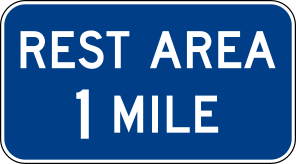
- The distance to the next rest area ahead. (correct)
- That a rest area entrance is at this location.
- That vehicles may pull onto the road from a shoulder ahead.
- The gas and food brands available at the coming exit.
Why: A blue rectangular Rest Area advance sign posts how far ahead the next rest area is, so you can plan whether to pull off in time. The pick that reads the sign as the entrance itself confuses this advance version with the ramp-mouth sign at the actual driveway; the advance sign is set back so drivers still have room to slow, signal, and exit.
-
3. What does this Flagger Ahead sign require of a driver approaching the work zone?
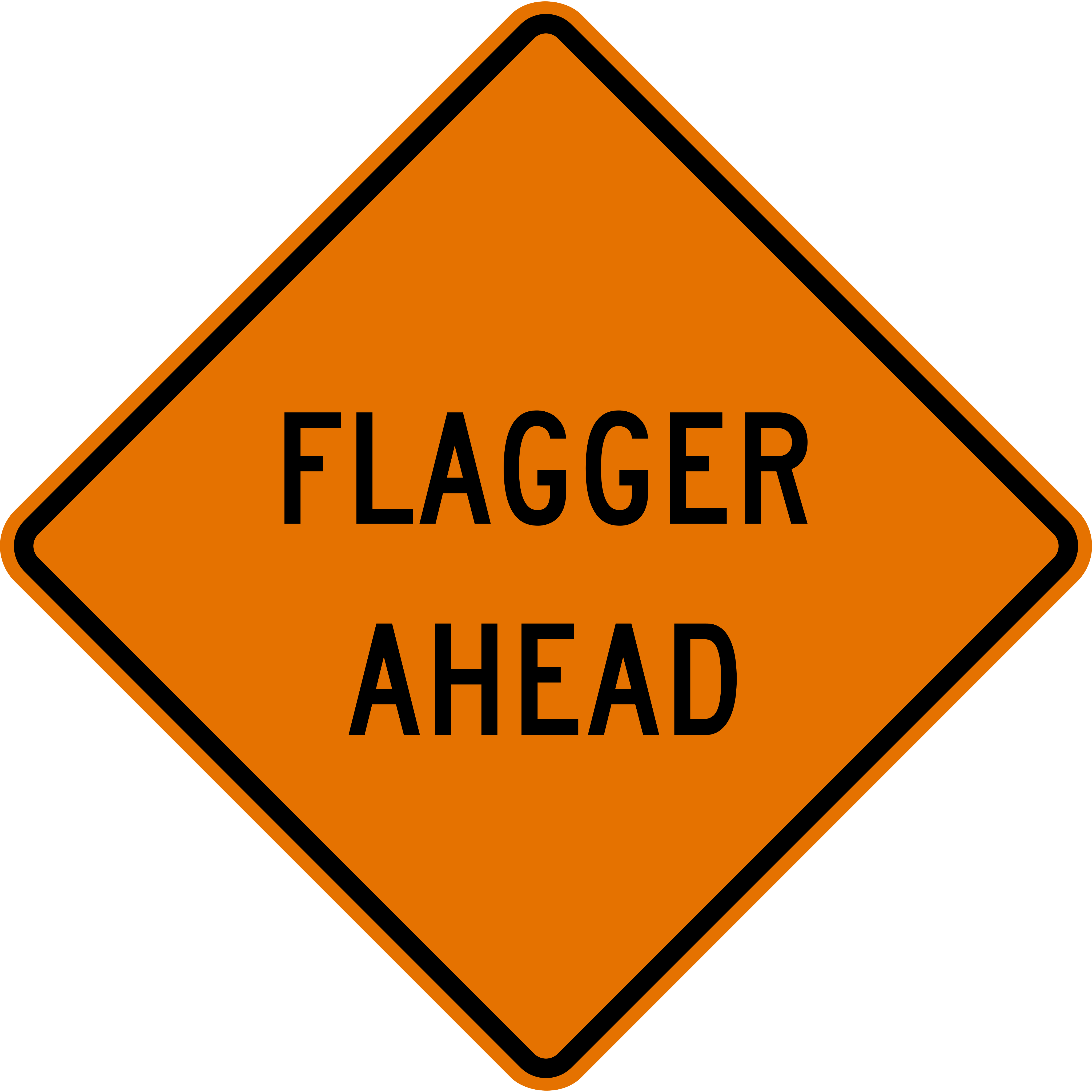
- Obey the hand signals of the flagger directing traffic ahead. (correct)
- Follow the pavement markings through the work zone until they end.
- Follow the traffic light at the next intersection ahead.
- Merge left because a lane is closed ahead of the sign.
Why: The sign warns that a person is directing traffic in the work zone ahead, and their hand signals govern how you move through it. The trap is the answer that keeps you obeying the next traffic light; the entry is explicit that a driver takes direction from the flagger rather than from the signal or the markings when both are present.
-
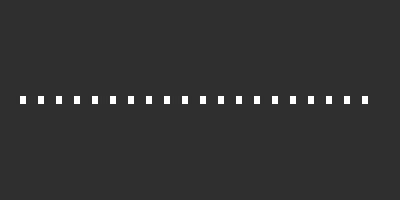
4. A lane line becomes a series of closely spaced short white dots through an interchange. What does this dotted pattern tell you about the lane?
- The lane ends at the next intersection and you must change lanes now.
- The lane continues but is shared, dropping, or merging. (correct)
- The lane is reserved for buses or high-occupancy vehicles through the gap.
- You may cross the dotted line only in an emergency.
Why: A dotted white extension line is a lane line continued in short, closely spaced dots through a merge, exit, interchange, or intersection area. The dots tell you the lane keeps going, but its purpose is changing: it is shared with entering traffic, about to drop, or being merged into another lane. Track the dots to stay aligned and watch for cars entering or exiting through the gap. The trap is the answer that reads a broken-up line as a lane-drop warning. A driver who learned that a solid line becomes broken when a lane is ending carries that habit forward and reads any interruption in the striping the same way. The dotted extension does the opposite: it says the lane continues where the normal stripe cannot be drawn, and only the pattern of use is changing.
-
5. A white wheelchair symbol on a blue square is posted on a sign ahead of you. What does it tell a driver?
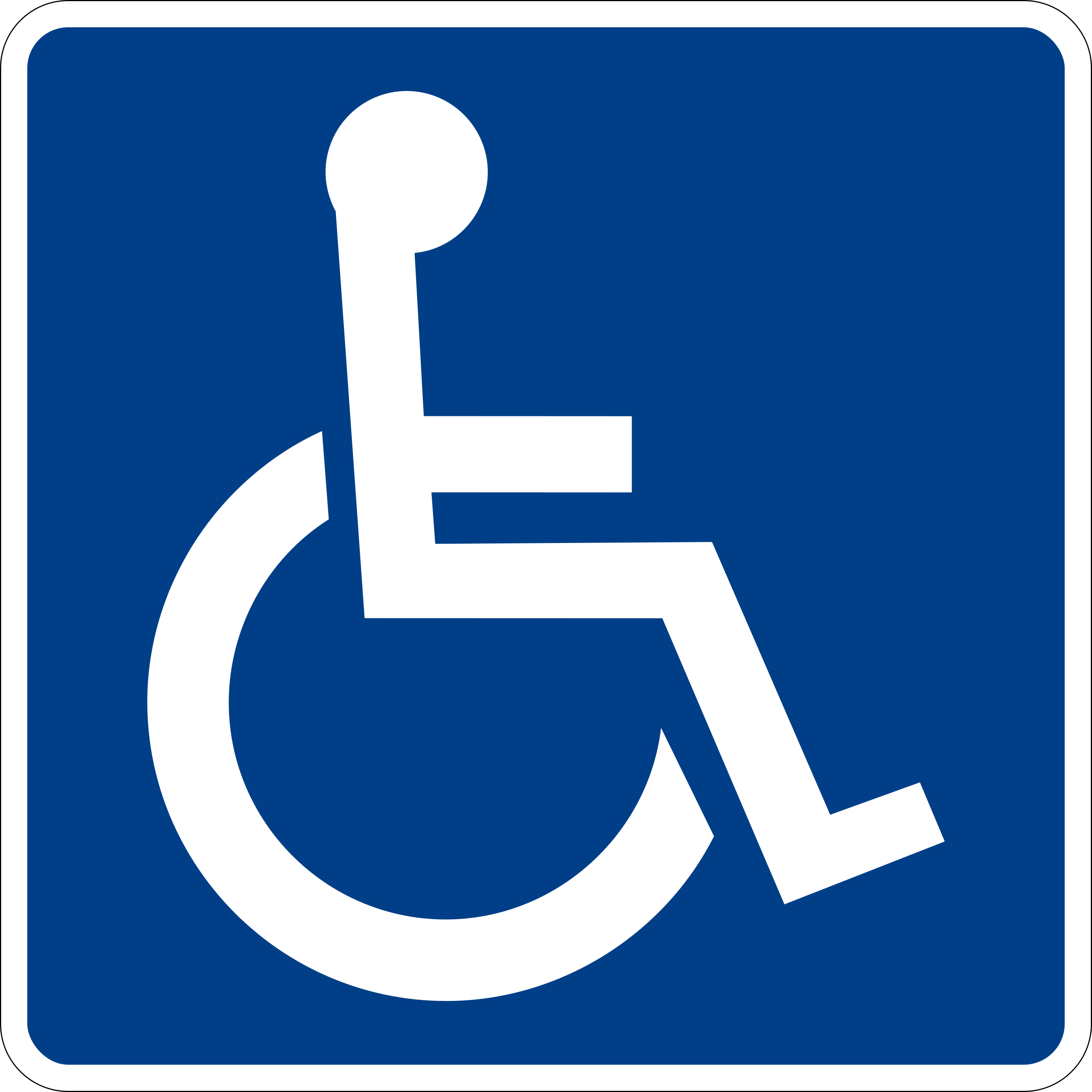
- The facility or parking space ahead is accessible to people with disabilities. (correct)
- A hospital is located ahead at the next exit.
- First aid or emergency medical services are available ahead.
- Pedestrians with limited mobility may be crossing the road ahead.
Why: A white wheelchair on a blue square is the International Symbol of Accessibility, and it tells you the facility or parking space ahead is accessible to people with disabilities. If you treat every blue services sign as medical, you pick the hospital answer instead. Hospitals carry a white H, not a wheelchair.
-
6. What should a driver do when approaching this Road Work Ahead sign?
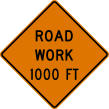
- Slow down and watch for workers, equipment, and changed lanes. (correct)
- Stop at the sign and wait for a flagger before proceeding.
- Merge left because the right lane closes at the sign.
- Take the marked detour beginning at the sign.
Why: This advance warning sign tells you there's road work ahead, so slow down and watch for workers, equipment, and changed lanes. The merge answer comes from treating this general work-zone warning as the arrowed lane-closure sign that follows it further along the approach only when a lane actually drops.
-
7. What does this yellow-green pentagon sign tell you about the road ahead?

- A school zone or school crossing is ahead; slow down and watch for children. (correct)
- A pedestrian crosswalk is ahead; yield to any pedestrian already in the road.
- You are entering a school speed zone; the reduced limit applies whenever you see this sign.
- A stopped school bus with flashing lights is ahead; prepare to stop until the lights go off.
Why: The pentagon shape and fluorescent yellow-green color mark the school advance warning: a school zone or a school crossing is ahead, so slow down and watch for children stepping into the road. The trap is the plain pedestrian-crosswalk reading. Fluorescent yellow-green is also used on general pedestrian warnings, so a driver who keys on color alone and skips over the pentagon outline reaches for the crosswalk answer, when the five-sided shape is reserved for schools.
-
8. What does this yellow diamond sign warn of ahead?

- A single sharp curve that bends to the right.
- Three or more curves ahead, first one to the right. (correct)
- Two curves in opposite directions, starting with a bend to the right.
- A right-hand turn at an intersection ahead.
Why: The sign warns of a series of three or more curves ahead, and the first one bends to the right. Reduce speed before the first curve and stay ready for steering reversals through the whole stretch. The two-bend answer catches drivers who read the S-shape symbol as a reverse curve, the pattern carried by the W1-4R Reverse Curve sign, which caps at exactly two bends.
-
9. What does this sign require of a driver turning left when the signal shows a solid green ball?
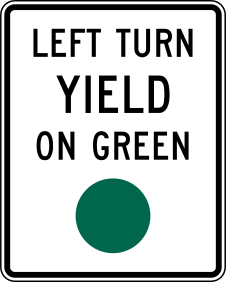
- Yield to oncoming traffic before completing the turn. (correct)
- Come to a full stop at the line, then turn when clear.
- Turn without yielding, because the green ball protects the turn.
- Wait for a green arrow; the circular green does not allow a left turn.
Why: The placard restates the permissive left-turn rule: on a circular green ball, a driver may turn left but must first wait for a safe gap in oncoming traffic. The trap is the choice that treats the green ball as a protected turn, which is what a green arrow does; the placard is posted precisely because the ball does not protect the turn.
-
10. You see a fluorescent yellow-green pedestrian symbol painted on the pavement ahead. What does this pavement marking warn you about?
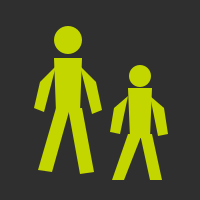
- A school crossing is just ahead (correct)
- A general pedestrian crosswalk with no school nearby
- A playground or park entrance ahead
- A bike route crossing the roadway
Why: A fluorescent yellow-green pedestrian symbol painted on the pavement warns you that a school crossing is just ahead, so slow down, watch for children and crossing guards, and be ready to stop. The traffic-control manual reserves this pavement marking for school crossings; it isn't a general crosswalk indicator, a park symbol, or a bike-route marker. Drivers who read any pedestrian figure on the roadway as an ordinary crosswalk warning are the ones who miss that this specific pavement marking flags a school zone.
Where to go next.
Ready for a longer go? Take the full Colorado practice test or jump into the topic study guide.
This diagnostic is one snapshot. The Colorado book unlocks a companion that turns it into a ranked study plan and re-ranks your weakest topics every time you practice, so the top of the list is always what to drill next.