Illinois Practice Test
A full-length practice test for the Illinois SOS knowledge test.
35 Questions Click an answer to reveal the explanation


















Illinois Practice Test (35 questions). Correct answers and explanations are noted under each question.
-
1. The word BUS is painted in white in a travel lane. What tells you who may use the lane and during which hours?
- The posted signs at the location (correct)
- The color of the pavement legend
- Whether the legend spells out BUS ONLY or BUS STOP
- A federal default schedule for bus lanes
Why: The BUS pavement legend identifies a lane or curb zone as bus-designated, but the posted regulatory signs at that location are what state who may enter and when. The trap is the choice that reads the specific legend wording as if BUS ONLY versus BUS STOP carried the schedule itself; the pavement word only supplements the signs, and the signs carry the who and the when.
Source: Manual on Uniform Traffic Control Devices, marking 3E.03 (BUS Pavement Legend).
-
2. What does this advance warning sign tell a driver about the road ahead?
- Railroad tracks cross ahead; slow down and be ready to stop for a train. (correct)
- Railroad tracks are at this location; yield to any approaching train.
- A traffic light is ahead where the driver may need to stop.
- A school crossing is ahead with children who may be crossing.
Why: The round yellow disc is the advance warning that railroad tracks cross the road ahead, so you slow down, look both ways, and be ready to stop for a train. The trap is the choice that treats this sign as the crossbuck posted at the tracks themselves; the crossbuck is white and X-shaped, while this round yellow sign sits back from the crossing to warn a driver in time to slow.
Source: Manual on Uniform Traffic Control Devices, sign W10-1 (Highway-Rail Grade Crossing (Round Advance Warning)).
-
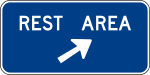
3. What does this rest area sign require of a driver who wants to stop at the rest area?
- Turn where the arrow points to enter the rest area. (correct)
- Continue straight; the entrance ramp is farther ahead.
- Take the next freeway exit to reach the rest area.
- Slow down for pedestrians walking across the roadway.
Why: The sign is posted at the turn-off itself, and the diagonal arrow shows the ramp or driveway that enters the rest area. The trap is the answer that treats it as an advance notice placed miles ahead of the exit; that job belongs to a different rest area guide sign posted well upstream, while this one appears right at the entrance and is the last chance to turn in.
Source: Manual on Uniform Traffic Control Devices, sign D5-2 (Rest Area Entrance Direction).
-
4. A single broken yellow line runs down the center of a two-way roadway. What does it permit a driver to do?
- Pass slower traffic by briefly crossing into the oncoming lane when the way is clear (correct)
- Make left turns from the center lane in either direction of travel
- Drive in the oncoming lane whenever traffic in the driver's own lane is heavy
- Straddle the line to share the roadway with wide oncoming vehicles
Why: A single broken yellow center line permits passing when the way is clear. A driver may briefly cross into the oncoming lane to pass slower traffic and then return. The trap is the answer that treats this line as a two-way left-turn lane; those lanes are marked with outer solid yellow lines paired with inner broken yellow lines, and a driver who learned that pattern first can reach for it here.
Source: Manual on Uniform Traffic Control Devices, marking 3B.01 (Broken Yellow Center Line).
-
5. The white word legend SCHOOL XING is painted in your travel lane. What does it warn you to do as you approach?
- Slow down, scan both sides for children, and be ready to stop for a pedestrian or crossing guard. (correct)
- Stop at the legend and wait for a crossing guard to wave you through.
- Reduce speed only after a child steps into the roadway ahead.
- Change into a non-adjacent lane before reaching the school property.
Why: The SCHOOL XING legend warns that a school crossing is just ahead. Slow down, scan both sides of the road for children, and be ready to stop for a pedestrian or crossing guard using the crosswalk. Drivers who wait until a child steps into the roadway are treating the marking as a reactive brake cue, when a legend printed ahead of the crossing exists to prepare you before anyone appears.
Source: Manual on Uniform Traffic Control Devices, marking 3B.21 (SCHOOL XING Pavement Legend).
-
6. What should a driver understand from this Curve Right sign?
- Slow before the rightward curve and keep to your lane. (correct)
- Stop at the curve and yield to oncoming traffic before entering.
- Make a sharp right turn at the intersection ahead.
- Merge left because the right lane ends ahead.
Why: This is a warning of a rightward curve, so be ready to slow before the bend as the road calls for and hold your lane through it. Drivers who read a yellow warning diamond as though it carried the regulatory force of a red-and-white sign, expecting it to command a stop or yield, are the ones drawn to the stop-and-yield answer.
Source: Manual on Uniform Traffic Control Devices, sign W1-2R (Curve Right).
-
7. What does this R15-6 sign require of a driver?
- Keep motor vehicles off the light rail or railroad tracks. (correct)
- Stop before crossing the tracks ahead.
- Yield the right of way to any approaching train.
- The lane is reserved for buses and rail vehicles only.
Why: The sign is a regulatory prohibition: motor vehicles may not travel on the light rail or railroad tracks that run beside the roadway. Drivers who read any track-related sign as a cue to stop reach for the stop-before-crossing answer, importing the rule that belongs to a crossbuck or an octagonal stop sign at the crossing itself.
Source: Manual on Uniform Traffic Control Devices, sign R15-6 (No Motor Vehicles On Tracks).
-
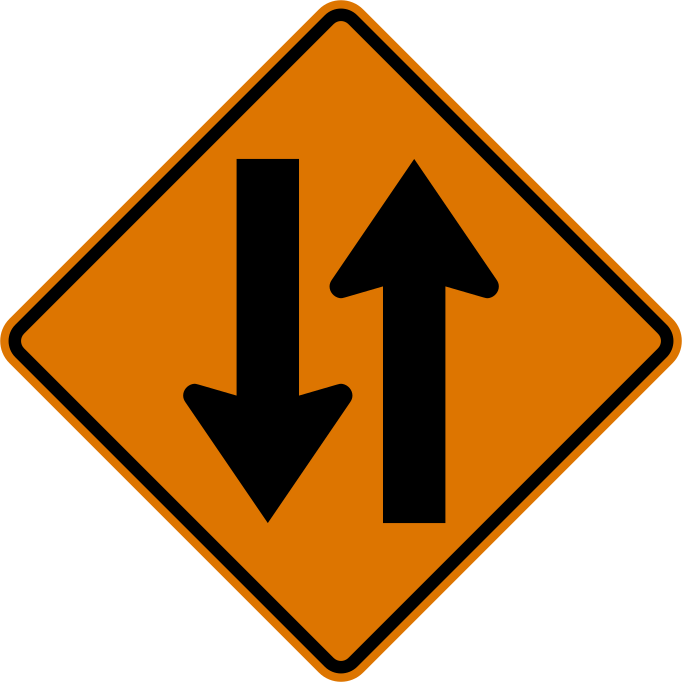
8. What does this orange diamond sign warn of ahead?
- Two-way traffic shares the roadway ahead through the construction area. (correct)
- Your lane ends ahead and traffic must merge to the left.
- A detour begins ahead and directs traffic off the roadway.
- Passing is prohibited through the construction zone ahead.
Why: The orange diamond warns that through the construction area the roadway carries vehicles in both directions, so oncoming traffic will share the same pavement and a driver has to stay right of the centerline. The no-passing answer is the pull here because two-way work zones often do restrict passing, and a learner who has driven through one associates the two ideas; this sign warns of the two-way condition itself, and a separate device carries any passing prohibition.
Source: Manual on Uniform Traffic Control Devices, sign CW6-3 (Two-Way Traffic (Work Zone)).
-
9. What does this Added Lane sign tell a driver about the road ahead?
- A new lane joins from the right; no one is required to merge. (correct)
- The right lane ends ahead, so merge left before it closes.
- Two lanes narrow into one lane ahead.
- The right lane becomes an exit-only lane ahead.
Why: The Added Lane sign says a new lane joins from the right, so through traffic can hold its lane without having to merge. The trap is the lane-ends warning: a similar yellow diamond, but one whose arrows narrow two lanes into one. Drivers who remember the shape but not which way the arrows run read this as a command to merge left, when the join happens on its own.
Source: Manual on Uniform Traffic Control Devices, sign W4-3R (Added Lane (Right)).
-
10. A white right-turn arrow is painted in the lane you're driving in. What does it require?
- You must turn right at the next intersection. (correct)
- You may turn right or continue straight from the lane.
- You must yield to traffic before turning right.
- You must stop at the arrow before proceeding.
Why: A right-turn arrow painted in the lane makes that lane right-turn only, so any driver who enters it must turn right at the next intersection. The answer that also lets you continue straight is the trap for drivers who read the painted arrow as guidance to weigh against other movements, the way a shared-lane 'sharrow' marking works, rather than as a lane restriction that rules out every movement the arrow does not show.
Source: Manual on Uniform Traffic Control Devices, marking 3B.24 (Right-Turn Arrow).
-
11. A lane is marked on the pavement with a white arrow that points both left and right. What does this require of a driver in that lane?
- Turn left or turn right; going straight is not allowed. (correct)
- Turn left only, since the left arrow has priority.
- Continue straight or turn, based on traffic conditions.
- Yield to oncoming traffic before choosing a direction.
Why: A two-headed arrow marks a mandatory-turn lane: a driver in that lane must go left or right, and continuing straight is not permitted. The trap is the option that keeps straight on the table as a traffic-dependent choice, which is how a shared through-and-turn lane works. This marking is not shared. The lane is dedicated to turning, and the through movement has been ruled out before the stop bar.
Source: Manual on Uniform Traffic Control Devices, marking 3B.24 (Left-or-Right Turn Arrow).
-
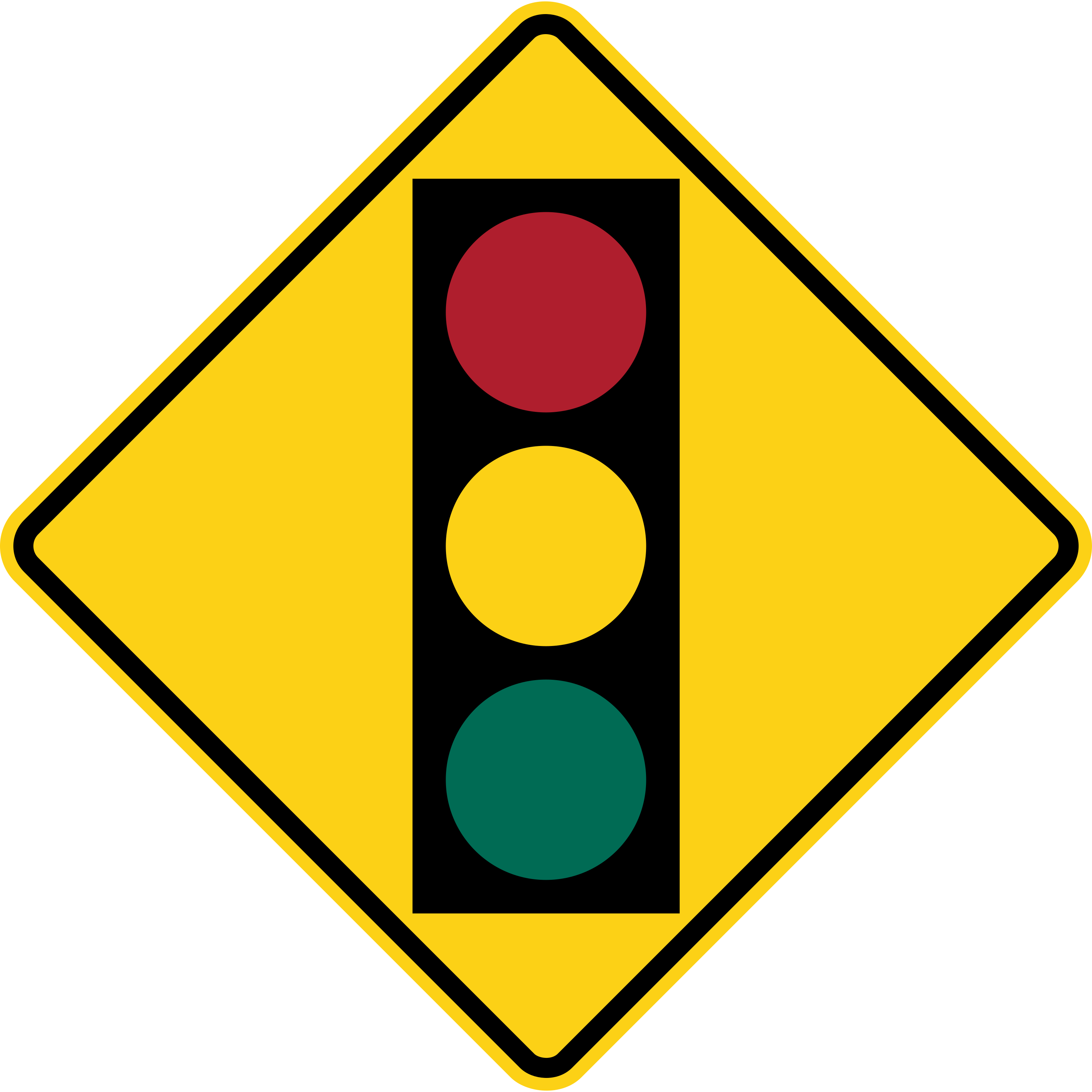
12. What does this warning sign tell a driver is ahead?
- A stop sign is ahead; prepare to come to a full stop before the sign.
- A traffic light is ahead; prepare to stop if the light is red or changes. (correct)
- A yield sign is ahead; prepare to slow and give way to cross traffic.
- A railroad crossing is ahead; prepare to stop for an approaching train.
Why: The Signal Ahead diamond warns that a traffic light is coming and calls for you to be ready to stop if the light is red or changes when you reach it. The trap is the answer that reads this as Stop Ahead. Stop Ahead is also a yellow diamond, but its interior symbol is a red octagon, not the signal head printed on the sign in front of you.
Source: Manual on Uniform Traffic Control Devices, sign W3-3 (Signal Ahead Symbol).
-
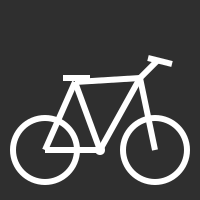
13. A white bicycle symbol painted on the pavement next to a solid white lane line marks the lane as what?
- A portion of the roadway set aside for the preferential use of bicyclists. (correct)
- A shared lane where cars and bikes have equal priority.
- A crossing point where bicyclists cut across traffic.
- A path reserved for bicycles only, closed to all motor vehicles at all times.
Why: The bike symbol paired with a solid white lane line marks the lane as reserved for the preferential use of bicyclists. The trap is the choice that stretches "preferential" into "exclusive," shutting every motor vehicle out at every hour; that overshoots the rule, because state and local traffic law spell out when other vehicles may enter or cross a bike lane.
Source: Manual on Uniform Traffic Control Devices, marking 9E.01 (Bicycle Lane Symbol).
-
14. You see this yellow diamond sign on approach. What should you be prepared to do at the intersection ahead?
- Slow down and yield to vehicles already in the circle (correct)
- Come to a full stop before entering the circle
- Enter first because circle traffic must yield to you
- Continue at speed since the sign only marks the exit
Why: The yellow diamond warns of a roundabout ahead, so slow on approach and be ready to obey the entry yield control that gives priority to vehicles already circulating counterclockwise. Drivers carrying the four-way-stop habit into every intersection pick the full-stop answer, reading any yellow warning as a signed halt when the diamond only announces what is coming.
Source: Manual on Uniform Traffic Control Devices, sign W2-6 (Circular Intersection (Roundabout)).
-
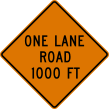
15. What does this orange diamond warning sign tell you about the road ahead?
- One lane about 1,000 feet ahead shared by traffic in both directions. (correct)
- Two lanes merge into one in your direction of travel ahead.
- The road is closed to through traffic 1,000 feet ahead.
- A one-way street begins 1,000 feet ahead.
Why: The sign warns that about 1,000 feet ahead the road narrows to one lane that both directions of traffic must share, so you slow down and prepare to yield to oncoming vehicles or a flagger. The trap is the choice that reads it as a lane-drop merge; a merge sign shows two same-direction lanes joining into one, while this sign specifically warns of two-way traffic sharing a single lane.
Source: Manual on Uniform Traffic Control Devices, sign CW20-4 (One Lane Road 1000 Ft).
-
16. You reach a railroad crossing pavement marking. Before starting onto the tracks, what must you have?
- Enough room on the far side to fully clear the tracks. (correct)
- A green light at the intersection past the railroad crossing.
- A hand signal from the driver who just crossed the tracks.
- Lowered gates and flashing lights over the near side of the crossing.
Why: You never roll onto the rails until there is space on the far side for your whole vehicle; a stall between them puts you in the path of a train. A green past the crossing controls the intersection ahead, not the rail behind it. Drivers who read that downstream signal as permission to enter, the way they would watch only the next light on an ordinary block, are the ones who end up stuck over the tracks.
Source: Manual on Uniform Traffic Control Devices, marking 3B.21 (Railroad Crossing Pavement Marking).
-
17. You see a series of solid white triangles painted on the pavement ahead, all pointing in your direction of travel. What are these markings telling you?
- A speed hump or speed table; slow before you cross it. (correct)
- A pedestrian crossing ahead; yield to anyone in it.
- A railroad crossing ahead; stop if a train is near.
- A lane ending ahead; merge into the next lane.
Why: A row of solid white triangles pointing in your direction of travel warns of a speed hump or speed table ahead, so slow to the posted advisory speed before you cross. The pedestrian-crossing answer is the trap: a crosswalk uses parallel white bars or blocks straight across the road, and drivers who read any bold white pavement pattern as a crosswalk cue miss that these triangles point along the lane, not across it.
Source: Manual on Uniform Traffic Control Devices, marking 3B.27 (Speed Hump Marking).
-
18. What does this sign tell a driver about the road ahead?
- A campground for tent camping is available ahead. (correct)
- A roadside rest area is available ahead.
- A picnic area with tables is available ahead.
- A recreational vehicle sanitary dump station is ahead.
Why: A white tent on a blue square is a services sign that marks a campground for tent camping ahead. Drivers who pick the sanitary dump station reach for it because the reference entry lists dump stations as a related facility, but that is a separate device for a different service: this sign promises overnight tent sites.
Source: Manual on Uniform Traffic Control Devices, sign D9-3 (Camping).
-
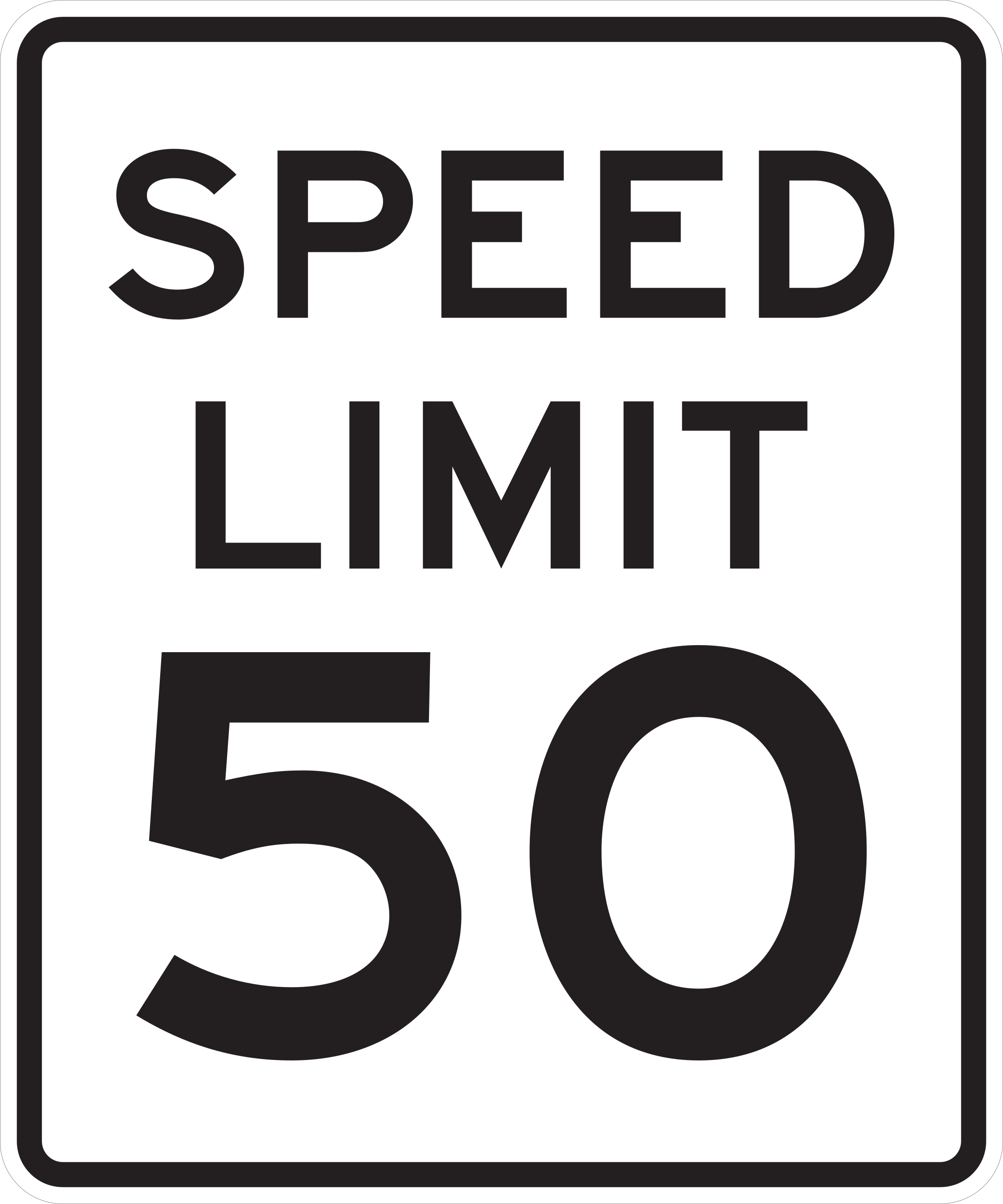
19. What does this Speed Limit 50 sign tell a driver about 50 mph on this roadway?
- 50 mph is the maximum legal speed on this roadway. (correct)
- 50 mph is the required minimum speed for through traffic here.
- 50 mph is an advisory speed for a curve or hazard ahead.
- Drivers should target 50 mph as the ideal cruising speed here.
Why: The sign posts the statutory maximum for the road ahead, so 50 mph is the ceiling, the highest speed a driver may legally travel until another speed limit sign changes it. Nothing on this sign requires driving 50 mph; it caps the speed rather than mandating it. Drivers who read the number as a required minimum are borrowing the look of a different white rectangle specifically labeled MINIMUM SPEED or MINIMUM SPEED LIMIT.
Source: Manual on Uniform Traffic Control Devices, sign R2-1 (Speed Limit 50).
-
20. What does this Turn Right sign warn a driver about the road ahead?
- A sharp right turn ahead where the road changes direction abruptly and a reduced speed is needed (correct)
- A gentle right curve ahead that can be rounded at the posted speed limit
- A right lane ending soon where drivers must merge left before it closes
- A right-turn-only lane ahead that through traffic must move out of
Why: The W1-1R diamond warns of a sharp right turn: an abrupt change in roadway alignment that cannot be taken safely at the approach speed, so slow before the bend and stay in your lane through it. The trap is the choice that reads this as a gentle curve; a curve at a speed you can already hold is warned by the W1-2 series, whose arrow bends smoothly rather than turning at a right angle like the arrow on this sign.
Source: Manual on Uniform Traffic Control Devices, sign W1-1R (Turn Right).
-
21. What does this Reverse Curve sign warn of ahead?
- A single curve bending to the right.
- Two consecutive curves in opposite directions, first right then left. (correct)
- A curve to the right followed by a straight section.
- Two sharp right-angle turns, first right then left.
Why: The W1-4R Reverse Curve sign warns of two consecutive curves in opposite directions, the first bending right and the second bending left. Approach at a reduced speed with steady steering; the advisory speed plaque, when posted, states the recommended speed for the pair. Drivers reach for the right-angle answer because they carry over the look of the Reverse Turn sign (W1-3R), which uses angular arrows for sharper turns in opposite directions rather than the smooth curves shown here.
Source: Manual on Uniform Traffic Control Devices, sign W1-4R (Reverse Curve (Right)).
-
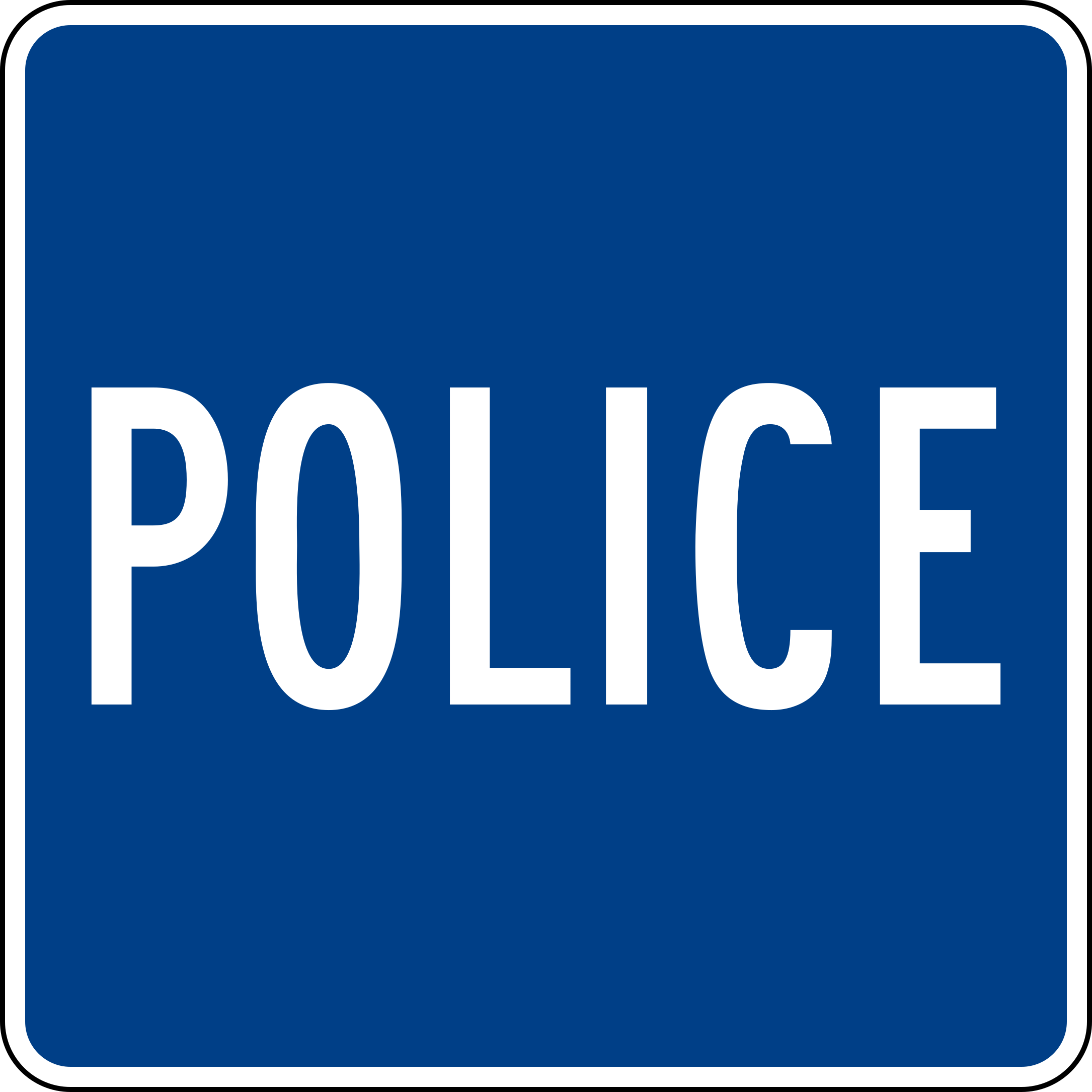
22. What does this Police sign tell a driver?
- A police station is located ahead. (correct)
- A hospital is located ahead.
- A rest area is located ahead.
- An emergency telephone is located ahead.
Why: The white POLICE legend on a blue square directs you to a police station or other law enforcement office ahead. The hospital answer reads the blue services background correctly but ignores the legend printed on the sign, which names police work, not medical care.
Source: Manual on Uniform Traffic Control Devices, sign D9-14 (Police).
-
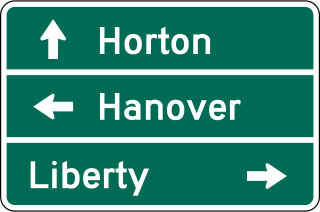
23. A single green rectangular sign at an intersection lists three destinations, each next to its own arrow. How should a driver use the sign?
- Follow all three arrows in the order they appear on the panel.
- Read the line for your destination and follow that line's arrow. (correct)
- Take the top destination first because straight-ahead arrows sit above turns.
- Yield to any traffic turning toward the destinations shown on the sign.
Why: A destination guide panel packs up to three places onto one green sign, and each destination carries its own arrow. Find the line for the place you're going and follow only that arrow. The choice that says to follow all three arrows in order traps drivers carrying the habit of reading stacked turn-by-turn navigation prompts, where each line is the next move in one trip rather than a separate destination to pick from.
Source: Manual on Uniform Traffic Control Devices, sign D1-3 (Destination Sign (Three Destinations)).
-
24. What does this sign require of a driver in the right lane?
- Merge left into the adjacent through lane because the right lane is ending ahead. (correct)
- The left lane is closing, so shift one lane to the right.
- Stay in the right lane, which becomes an exit-only lane at the ramp ahead.
- A new right lane is being added ahead, and through traffic may move into it.
Why: This yellow diamond warns that the right lane is closing, so a driver in it must signal, find a gap, and merge into the adjacent through lane on the left before the pavement drops. The trap is the answer that flips the merge direction; a driver who mixes this sign up with Left Lane Ends reads the tapered side as the left lane and moves right into a lane that has no reason to yield to them.
Source: Manual on Uniform Traffic Control Devices, sign W4-2R (Lane Ends (Right Lane Ends)).
-
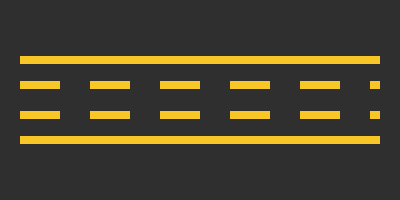
25. A center travel lane is bordered on each side by an outer solid yellow line and an inner broken yellow line. What is this lane used for?
- Left turns by traffic traveling in either direction. (correct)
- Passing slower vehicles when the adjacent through lane is blocked.
- Left turns made only by oncoming traffic from the opposite direction.
- Through travel to bypass congestion in the adjacent lane.
Why: A center lane bordered by outer solid and inner broken yellow lines is a two-way left-turn lane, used by traffic from both directions only to make left turns. The trap is the choice that treats the broken yellow line as a passing line; on a two-lane road a broken yellow line does permit passing, but here the broken line only marks where vehicles may cross into the lane to turn left, and passing inside the lane is not allowed.
Source: Manual on Uniform Traffic Control Devices, marking 3B.05 (Two-Way Left-Turn Lane).
-
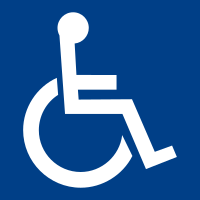
26. The blue wheelchair symbol painted on a parking space marks the space as what?
- Reserved for vehicles displaying a valid disability placard or plate. (correct)
- Free parking closest to the entrance for any driver in a hurry.
- Reserved for medical staff and emergency responders on duty.
- Loading zone for wheelchair-accessible vans during business hours.
Why: A parking space marked with the wheelchair symbol is reserved for vehicles displaying a valid disability placard or license plate. The trap is the answer that treats the symbol as a convenience marker for the closest spot to the entrance; these spaces are often near the door, but proximity is not what the paint reserves. Access for a placard or plate holder is.
Source: Manual on Uniform Traffic Control Devices, marking 3B.27 (Accessible Parking Symbol).
-
27. This pavement marking is painted across your lane at a stop-controlled intersection. Where must you bring your vehicle to a stop?
- Before any part of the vehicle crosses the line. (correct)
- With the front bumper directly over the line.
- At the curb of the cross street.
- Anywhere within one car length past the line.
Why: The stop line marks the exact boundary the vehicle must remain behind at a stop sign or red signal; the entry says to bring the front of the vehicle to a complete halt before any part of it crosses the line. The tempting wrong pick is stopping with the bumper directly over the line: drivers read the bar as a target to line up with rather than a boundary they may not cross, so they pull forward until the front wheel or bumper rests on the paint.
Source: Manual on Uniform Traffic Control Devices, marking 3B.16 (Stop Line).
-
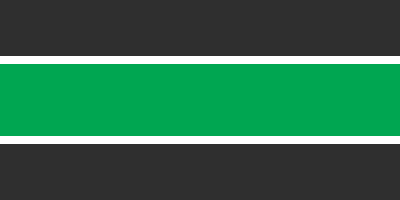
28. Solid green pavement bordered by white lines identifies what?
- A bicycle lane highlighted where it crosses motor vehicle paths. (correct)
- A shared lane for bicycles and buses only.
- A pedestrian crossing painted for extra visibility.
- A lane permanently closed to all motor vehicle traffic.
Why: A continuous green field bordered by white lines marks a bicycle lane and calls attention to it where bicyclists and motor vehicles cross paths, such as intersections, driveways, and merges. The color raises the lane's visibility without changing its legal status. Drivers who read the vivid green as a permanent barrier pick D, mistaking a visibility treatment for a change in who may use the lane.
Source: Manual on Uniform Traffic Control Devices, marking FHWA IA-14 (Green-Colored Bike Lane).
-
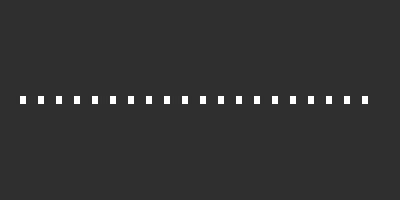
29. A lane line becomes a series of closely spaced short white dots through an interchange. What does this dotted pattern tell you about the lane?
- The lane ends at the next intersection and you must change lanes now.
- The lane continues but is shared, dropping, or merging. (correct)
- The lane is reserved for buses or high-occupancy vehicles through the gap.
- You may cross the dotted line only in an emergency.
Why: A dotted white extension line is a lane line continued in short, closely spaced dots through a merge, exit, interchange, or intersection area. The dots tell you the lane keeps going, but its purpose is changing: it is shared with entering traffic, about to drop, or being merged into another lane. Track the dots to stay aligned and watch for cars entering or exiting through the gap. The trap is the answer that reads a broken-up line as a lane-drop warning. A driver who learned that a solid line becomes broken when a lane is ending carries that habit forward and reads any interruption in the striping the same way. The dotted extension does the opposite: it says the lane continues where the normal stripe cannot be drawn, and only the pattern of use is changing.
Source: Manual on Uniform Traffic Control Devices, marking 3B.04 (Dotted White Extension Line).
-
30. What does this Fresh Oil sign require of a driver approaching the treated pavement?
- Brake and steer gently and leave extra following distance behind the vehicle ahead. (correct)
- Maintain highway speed since the treatment sets quickly under traffic.
- Stop before entering the treated section and wait for a flagger to wave you through.
- Change to the adjacent lane to avoid driving on the fresh surface.
Why: The sign marks a surface treatment that has just been laid down and has not yet set, so the pavement offers much less grip than it looks like it should. Brake and steer gently, and leave extra following distance so loose chips and oil thrown up by the vehicle ahead don't reach your windshield. The trap is the choice that turns the sign into a flagger cue and stops the driver; every orange work-zone diamond is a hazard warning, not a traffic-control order, and nothing on this one directs a halt.
Source: Manual on Uniform Traffic Control Devices, sign W21-2 (Fresh Oil).
-
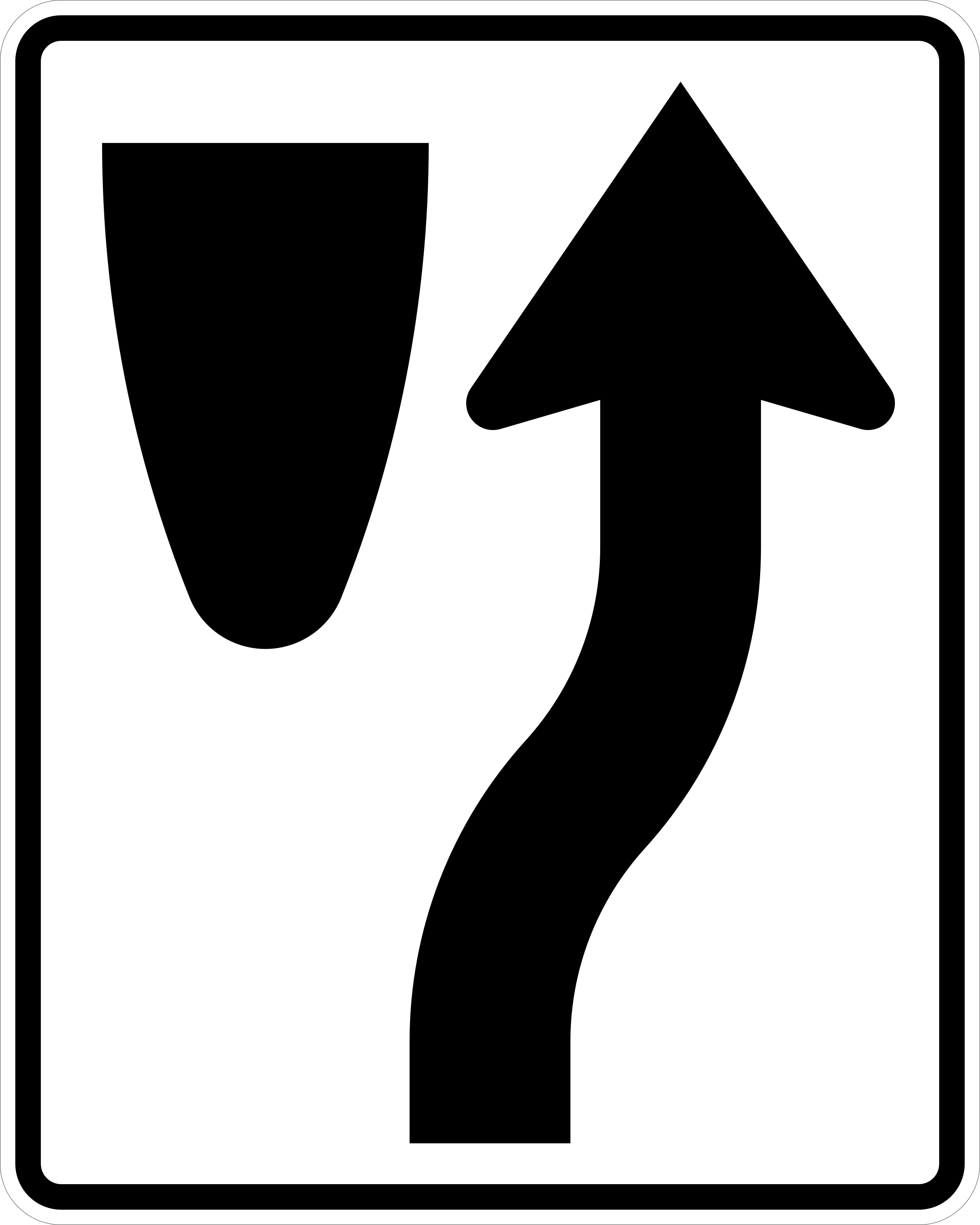
31. You approach this sign posted at the front of a raised median that splits the roadway. What does it require of you?
- Pass to the right of the upcoming island or divider. (correct)
- Choose either side of the divider that traffic allows.
- Stop before the divider and yield to oncoming vehicles.
- Move into the left lane before reaching the divider.
Why: The sign directs a driver to pass to the right of the island or divider ahead. The trap is the choice that lets a driver take either side; this sign carries a curved arrow showing one specific required path around the obstruction, not an option. A learner who picks a yield or a lane change is reading the arrow as advice about the roadway ahead rather than as a routing instruction at the obstruction itself.
Source: Manual on Uniform Traffic Control Devices, sign R4-7 (Keep Right (Symbol)).
-
32. What does this yellow diamond sign warn of ahead?
- A single sharp curve that bends to the right.
- Three or more curves ahead, first one to the right. (correct)
- Two curves in opposite directions, starting with a bend to the right.
- A right-hand turn at an intersection ahead.
Why: The sign warns of a series of three or more curves ahead, and the first one bends to the right. Reduce speed before the first curve and stay ready for steering reversals through the whole stretch. The two-bend answer catches drivers who read the S-shape symbol as a reverse curve, the pattern carried by the W1-4R Reverse Curve sign, which caps at exactly two bends.
Source: Manual on Uniform Traffic Control Devices, sign W1-5R (Winding Road (Right)).
-
33. The word STOP is painted in white across your travel lane. What does this pavement legend tell you?
- A stop sign or signal is ahead, and you must prepare to come to a complete stop. (correct)
- The legend itself is the stop line where the front wheels must halt.
- Cross traffic ahead has the right of way at an uncontrolled intersection.
- A rolling stop is allowed when the intersection ahead is clear.
Why: The STOP legend on the pavement reinforces an upcoming stop sign or signal and warns you to prepare to bring the vehicle to a complete stop. The trap is the choice that treats the painted word as the stop line itself; the legend typically appears just before a transverse stop bar, so the line you halt behind is that bar, not the word painted on the approach.
Source: Manual on Uniform Traffic Control Devices, marking 3B.20 (STOP Pavement Legend).
-
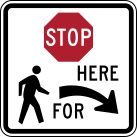
34. What does this Stop Here For Pedestrians sign require of a driver?
- Come to a complete stop for pedestrians at the marked crosswalk on the right. (correct)
- Yield to pedestrians and continue through the crosswalk if it is clear.
- Stop at the sign on every approach, whether or not a pedestrian is present.
- Slow down and watch for people who may cross the road ahead.
Why: The sign is a regulatory instruction to come to a full stop at the stop line for any pedestrian using the marked crosswalk on the right. The trap is the answer that treats it as an unconditional stop on every approach, which borrows the rule from the red octagonal stop sign; this device is triggered by a person in the crosswalk, not by arriving at the sign.
Source: Manual on Uniform Traffic Control Devices, sign R1-5bR (Stop Here For Pedestrians (Right)).
-
35. What does a white diagonal crosshatched area between an exit ramp and a freeway lane require of you?
- Drive through it only if you need to change your mind about exiting.
- In normal driving, stay out of the striped zone and pick a side before the point of the wedge. (correct)
- Treat it as a two-way separator between opposing traffic streams.
- Yield to any vehicle already inside the striped zone.
Why: In normal driving, stay out of the striped zone and pick a side before the point of the wedge. The white border and diagonal stripes mark a painted gore separating same-direction traffic, so both sides of the marking carry traffic moving the same way, and the marking is not a travel or decision lane. Drivers who carry the yellow-lines-mean-opposing-traffic rule over to any zone marking they see reach for the two-way separator in C.
Source: Manual on Uniform Traffic Control Devices, marking 3B.25 (White Diagonal Crosshatch (Painted Gore / Channelizing Area)).
Keep going.
Want explanations one question at a time? Browse every Illinois practice question or jump into the topic study guide.