Virginia Driver's Permit Diagnostic Quiz
Find your weak spots before you book the test. 10 questions drawn from the topics the Virginia driver manual spends the most time on. You'll see which topics need work the moment you finish; enter your email at the end and we'll send the full ranked plan with exact scores and the chapters to study next.
Virginia Driver's Permit Diagnostic Quiz (10 questions). Correct answers and explanations follow each question.
-
1. What should a driver do after seeing this Reduced Speed Limit Ahead sign near a work zone?
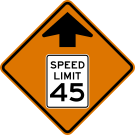
- Slow to the posted number before reaching the regulatory sign it announces (correct)
- Drop to the shown speed immediately as soon as this sign is visible
- Come to a complete stop before the marked work zone begins
- Keep the current speed until workers are visible in the zone
Why: An orange diamond warns of what is ahead, not what is required now. The number posted on this sign starts where the regulatory sign it announces is placed, so you slow through the gap and arrive at that regulatory sign already at the new limit. Drivers who read any sign carrying a speed number as the limit itself brake the moment they see this one, applying the reduction before the zone it belongs to.
-
2. A paved area outlined in white and filled with white diagonal stripes sits between a through lane and an off-ramp. What does this marking require of a driver approaching it?

- Steer around it and stay in a defined lane on one side. (correct)
- Drive across it only when changing lanes to merge.
- Stop at the stripes and yield to through traffic.
- Use it as an extra travel lane during heavy congestion.
Why: A painted channelizing island marks a neutral area, and the rule is to keep out of it: steer around the stripes the way you would a raised island and settle into a defined lane on one side before you reach the point. The trap is the answer that treats the striped gore as pavement to drive across on the way into an exit. Gore stripes and merge markings sit next to each other in the same places, so a driver who has watched cars cut across one reads the other as fair use, when the stripes are telling them to stay out.
-
3. What does this orange diamond warning sign tell you about the road ahead?
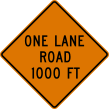
- One lane about 1,000 feet ahead shared by traffic in both directions. (correct)
- Two lanes merge into one in your direction of travel ahead.
- The road is closed to through traffic 1,000 feet ahead.
- A one-way street begins 1,000 feet ahead.
Why: The sign warns that about 1,000 feet ahead the road narrows to one lane that both directions of traffic must share, so you slow down and prepare to yield to oncoming vehicles or a flagger. The trap is the choice that reads it as a lane-drop merge; a merge sign shows two same-direction lanes joining into one, while this sign specifically warns of two-way traffic sharing a single lane.
-
4. What does this pavement marking permit a driver in the lane to do?

- Reverse direction with a U-turn at the intersection. (correct)
- Make a left turn only at the intersection.
- Use the lane for left turns from either direction of travel.
- Execute a three-point turn to change direction.
Why: A curved arrow that loops a full 180 degrees marks the lane as one where U-turns are permitted, so a driver may reverse direction at the intersection. The trap sits with the plain left-turn reading: a left-turn arrow bends once toward the left and stops there, while the U-turn arrow wraps the whole way around to show the reversal, and the two markings sit close enough in shape that the loop gets misread as an ordinary left.
-
5. What should a driver do when approaching this Divided Highway Ends sign?

- Keep right and be ready for oncoming traffic in the lane next to you. (correct)
- Merge left because the right lane ends ahead.
- Yield to traffic entering from a road that joins on the right.
- Prepare to stop because two one-way roadways are ending at an intersection.
Why: The two separated one-way roadways are about to merge back into one two-way road, so keep right and be ready for opposing traffic in the lane next to you. Passing here is risky because the neighboring lane now carries vehicles coming toward you rather than traveling with you. Drivers who read the word 'ends' on a yellow diamond as a lane drop reach for the merge-left answer, treating this the way they would a lane-reduction warning that uses the same shape and color.
-
6. What does this Hospital sign tell a driver?
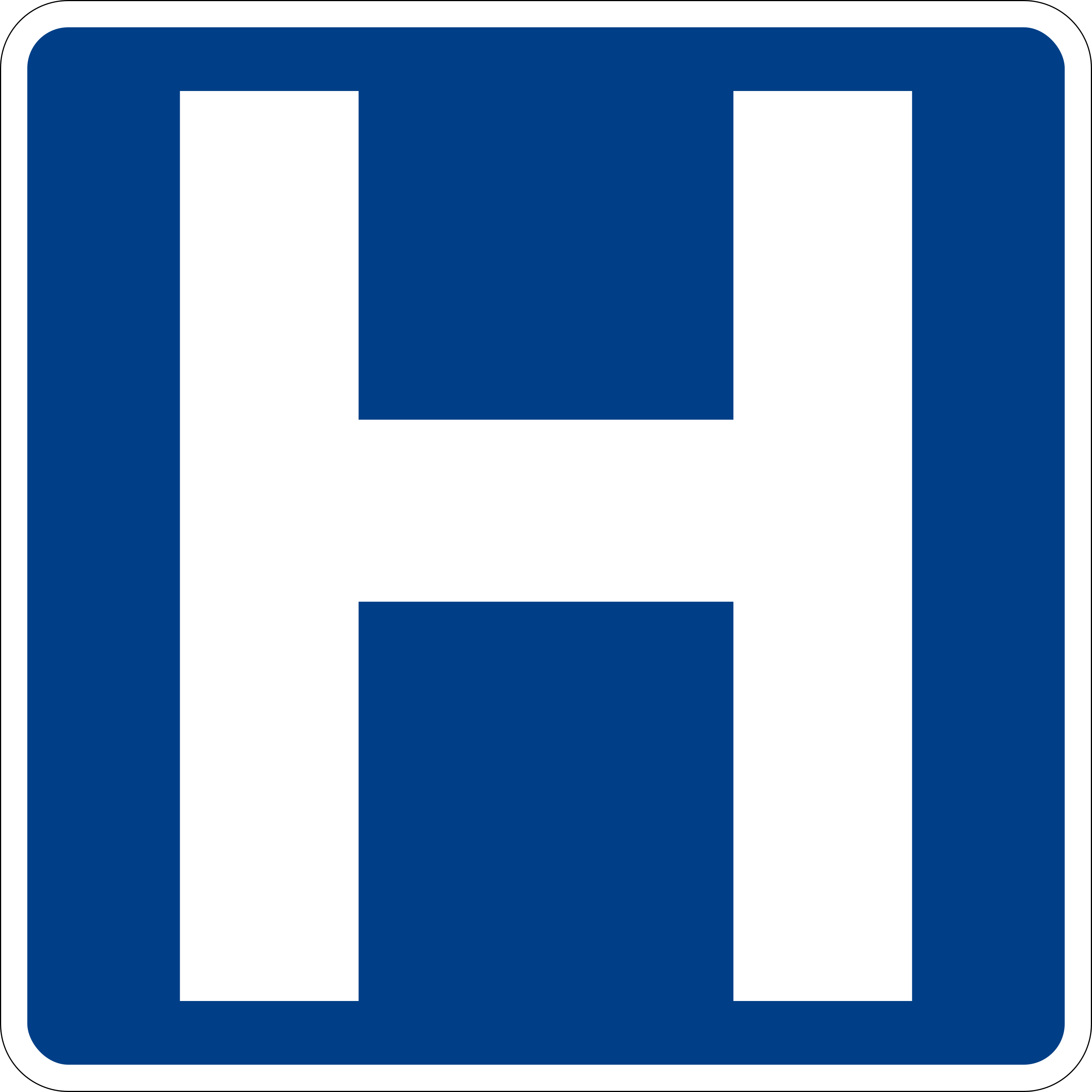
- A hospital is ahead in the direction the sign points. (correct)
- A helicopter landing zone is located ahead on the roadway.
- A general information center for travelers is ahead.
- A pharmacy providing prescription services is ahead.
Why: The white block letter H on a blue services square marks the route to a hospital that offers emergency care, in the direction the sign points. The trap is reading the H as a helipad marker; the block letter H on a blue guide square is reserved for a hospital route, and a helicopter landing area is signed with its own separate symbol.
-
7. What does this Turn Right sign warn a driver about the road ahead?

- A sharp right turn ahead where the road changes direction abruptly and a reduced speed is needed (correct)
- A gentle right curve ahead that can be rounded at the posted speed limit
- A right lane ending soon where drivers must merge left before it closes
- A right-turn-only lane ahead that through traffic must move out of
Why: The W1-1R diamond warns of a sharp right turn: an abrupt change in roadway alignment that cannot be taken safely at the approach speed, so slow before the bend and stay in your lane through it. The trap is the choice that reads this as a gentle curve; a curve at a speed you can already hold is warned by the W1-2 series, whose arrow bends smoothly rather than turning at a right angle like the arrow on this sign.
-
8. What does this R15-6 sign require of a driver?

- Keep motor vehicles off the light rail or railroad tracks. (correct)
- Stop before crossing the tracks ahead.
- Yield the right of way to any approaching train.
- The lane is reserved for buses and rail vehicles only.
Why: The sign is a regulatory prohibition: motor vehicles may not travel on the light rail or railroad tracks that run beside the roadway. Drivers who read any track-related sign as a cue to stop reach for the stop-before-crossing answer, importing the rule that belongs to a crossbuck or an octagonal stop sign at the crossing itself.
-
9. What does this crossbuck sign require of a driver approaching the tracks?
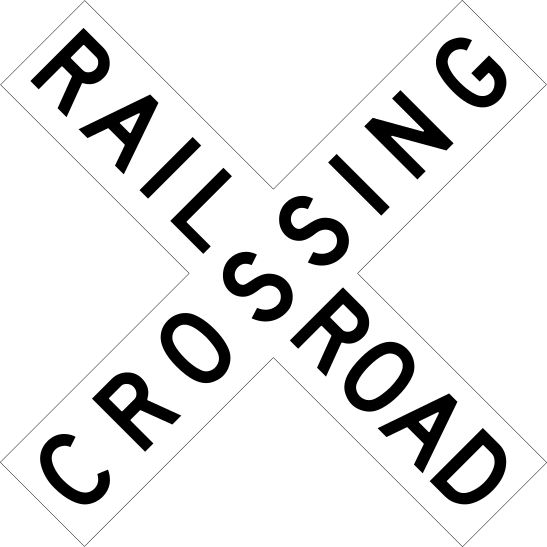
- Yield to any approaching train and cross only when the tracks are clear. (correct)
- Come to a complete stop before every crossing, whether or not a train is approaching.
- Proceed without slowing because the crossbuck only marks the location of the tracks.
- Yield to cross traffic on the road that intersects at this location.
Why: The crossbuck acts as a yield device at a highway-rail grade crossing: slow down, look and listen both ways, and cross only when no train is coming. The trap is the answer that treats every crossing as a mandatory stop, which carries a stop-sign habit over to a device that only demands a stop when a train is actually there.
-
10. What does the number on this milepost tell a driver?
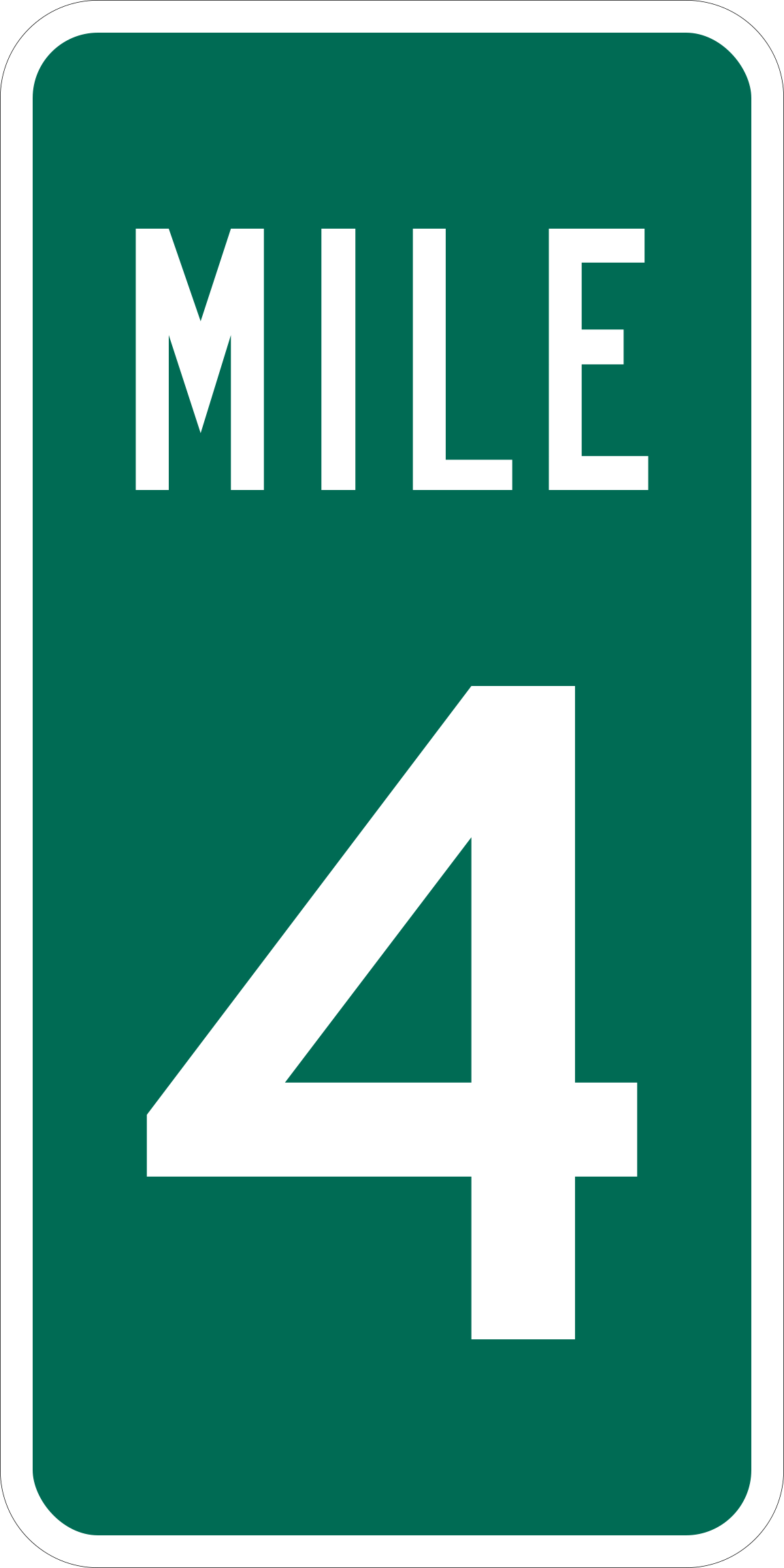
- Miles along the route from where it entered the state. (correct)
- The route number assigned to this highway.
- How many miles are left until the state line.
- The distance to the next numbered exit.
Why: Green milepost panels count up from the point where the route enters the state, giving a running mile count along the route rather than a distance to anywhere ahead. Depending on direction of travel the numbers may rise or fall, but they are not a countdown to the next border or exit. The "miles left until the state line" answer is the trap for drivers used to watching a GPS clock down to a destination. They expect the milepost to work the same way and read the panel as miles remaining rather than miles counted since entering.
Where to go next.
Ready for a longer go? Take the full Virginia practice test or jump into the topic study guide.
This diagnostic is one snapshot. The Virginia book unlocks a companion that turns it into a ranked study plan and re-ranks your weakest topics every time you practice, so the top of the list is always what to drill next.