Illinois Driver's Permit Diagnostic Quiz
Find your weak spots before you book the test. 10 questions drawn from the topics the Illinois driver manual spends the most time on. You'll see which topics need work the moment you finish; enter your email at the end and we'll send the full ranked plan with exact scores and the chapters to study next.
Illinois Driver's Permit Diagnostic Quiz (10 questions). Correct answers and explanations follow each question.
-
1. What does this D9-11b sign tell a driver about services available ahead?

- A public electric vehicle charging station is ahead. (correct)
- Gasoline is sold at a fuel pump ahead.
- A diesel truck stop is located ahead.
- A rest area for drivers is available ahead.
Why: The blue square with a fuel pump icon and the letters EV marks a public electric vehicle charging station ahead. The trap is the plain gasoline pump reading, taken by a driver who registers the pump icon and stops there without noticing that the letters on the pump are what name the fuel; on this sign those letters read EV, so the service ahead is charging, not gasoline.
-
2. What does this sign require of a driver turning left when the signal shows a solid green ball?
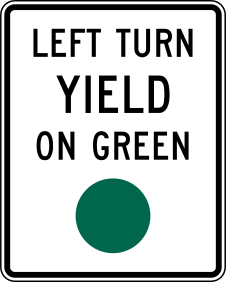
- Yield to oncoming traffic before completing the turn. (correct)
- Come to a full stop at the line, then turn when clear.
- Turn without yielding, because the green ball protects the turn.
- Wait for a green arrow; the circular green does not allow a left turn.
Why: The placard restates the permissive left-turn rule: on a circular green ball, a driver may turn left but must first wait for a safe gap in oncoming traffic. The trap is the choice that treats the green ball as a protected turn, which is what a green arrow does; the placard is posted precisely because the ball does not protect the turn.
-
3. What does this yield sign require of a driver approaching it?
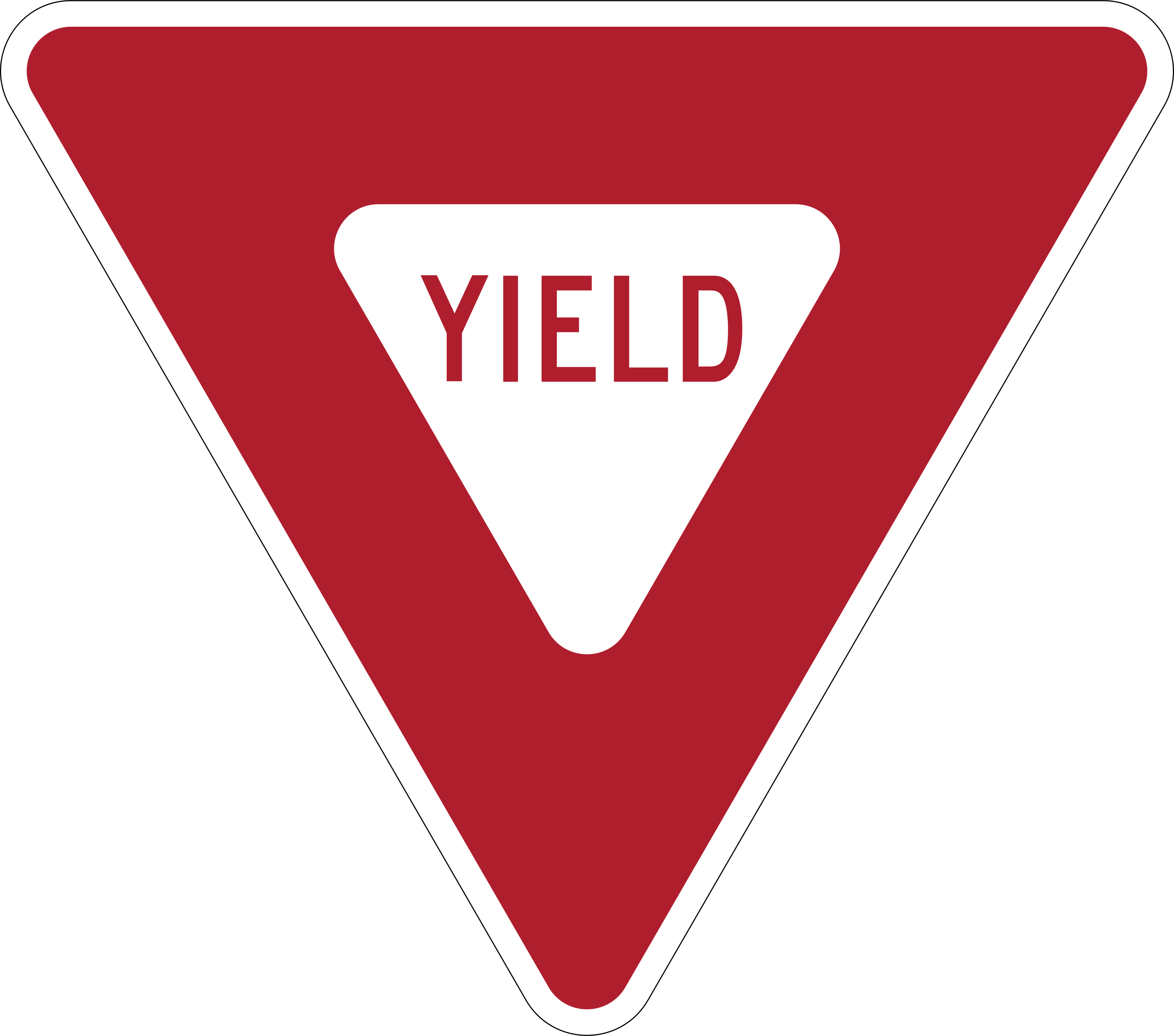
- Slow down, give the right-of-way to cross traffic and pedestrians, and stop if needed. (correct)
- Stop completely at the line every time before entering the intersection.
- Speed up through the intersection to clear it before cross traffic arrives.
- Continue at the posted speed unless a signal or officer directs otherwise.
Why: A yield sign asks a driver to slow, scan for cross traffic and pedestrians, and stop only when someone else has the right-of-way; if the way is clear, the driver may roll through without stopping. The trap is the answer that turns the triangle into a stop sign because both signs are red, but the octagon demands a halt every time and the downward triangle demands one only when a conflict is present.
-
4. What does this Police sign tell a driver?
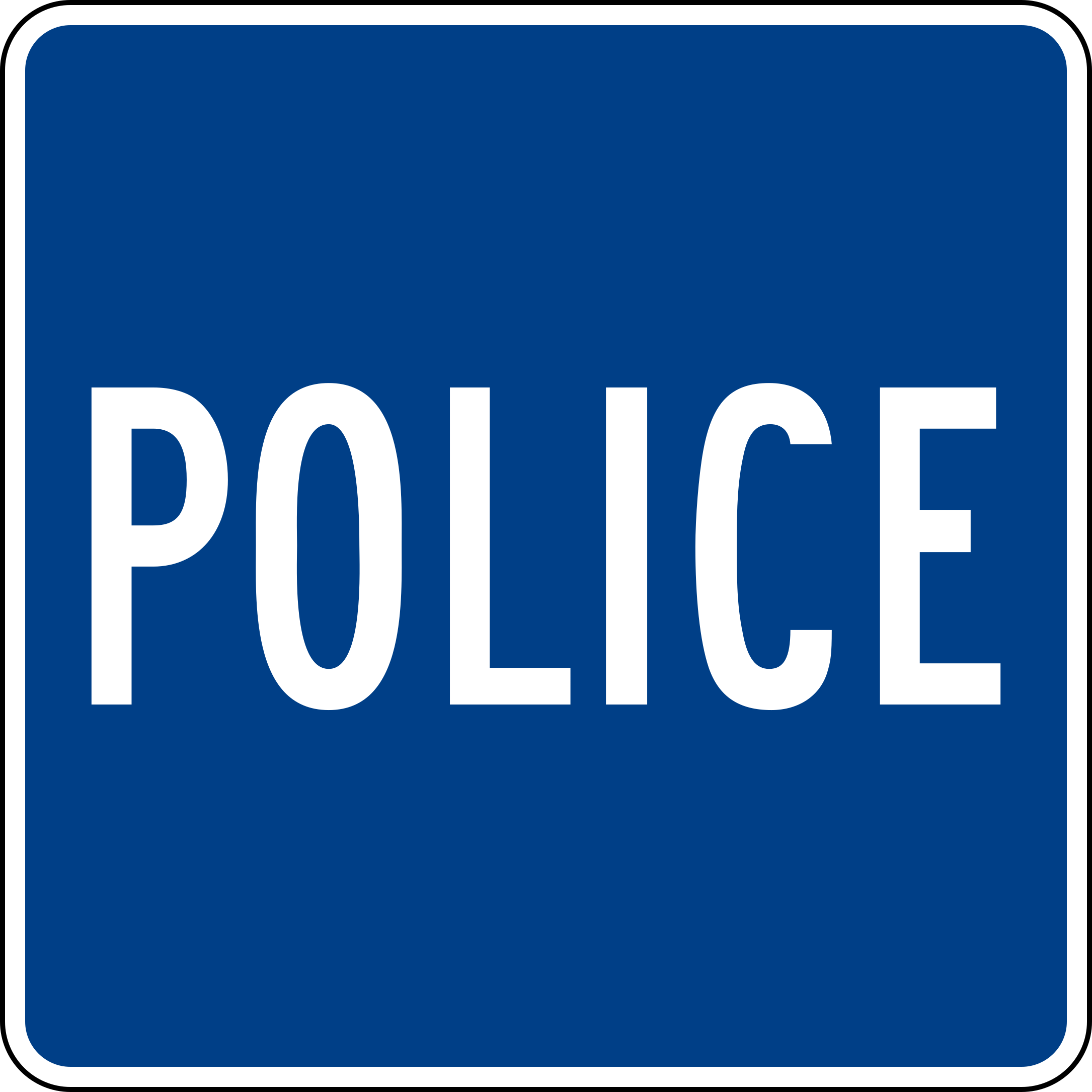
- A police station is located ahead. (correct)
- A hospital is located ahead.
- A rest area is located ahead.
- An emergency telephone is located ahead.
Why: The white POLICE legend on a blue square directs you to a police station or other law enforcement office ahead. The hospital answer reads the blue services background correctly but ignores the legend printed on the sign, which names police work, not medical care.
-
5. What does this Two-Way Traffic sign tell a driver about the road ahead?
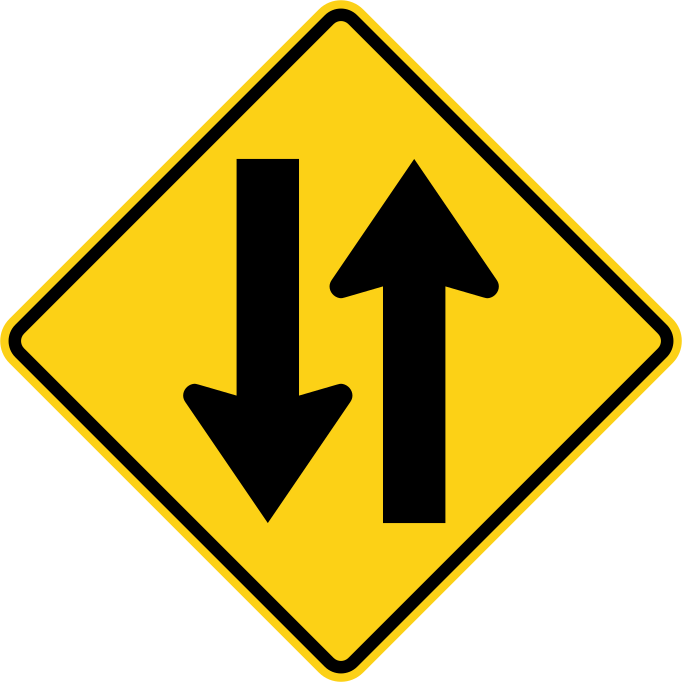
- The one-way roadway changes to two-way traffic ahead. (correct)
- The right lane ends and traffic must merge left.
- A divided highway with a median begins ahead.
- A no-passing zone begins at this sign.
Why: The yellow diamond warns that a one-way roadway is changing to two-way traffic ahead, so you should stay right, hold off on passing, and watch for oncoming vehicles. The trap is the no-passing-zone reading: the entry does say do not pass at this sign, and a learner who fixates on that phrase reaches for the pennant-shaped no-passing zone sign instead of the warning that opposing traffic is about to appear.
-
6. You see a fluorescent yellow-green pedestrian symbol painted on the pavement ahead. What does this pavement marking warn you about?
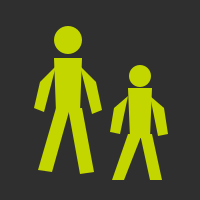
- A school crossing is just ahead (correct)
- A general pedestrian crosswalk with no school nearby
- A playground or park entrance ahead
- A bike route crossing the roadway
Why: A fluorescent yellow-green pedestrian symbol painted on the pavement warns you that a school crossing is just ahead, so slow down, watch for children and crossing guards, and be ready to stop. The traffic-control manual reserves this pavement marking for school crossings; it isn't a general crosswalk indicator, a park symbol, or a bike-route marker. Drivers who read any pedestrian figure on the roadway as an ordinary crosswalk warning are the ones who miss that this specific pavement marking flags a school zone.
-
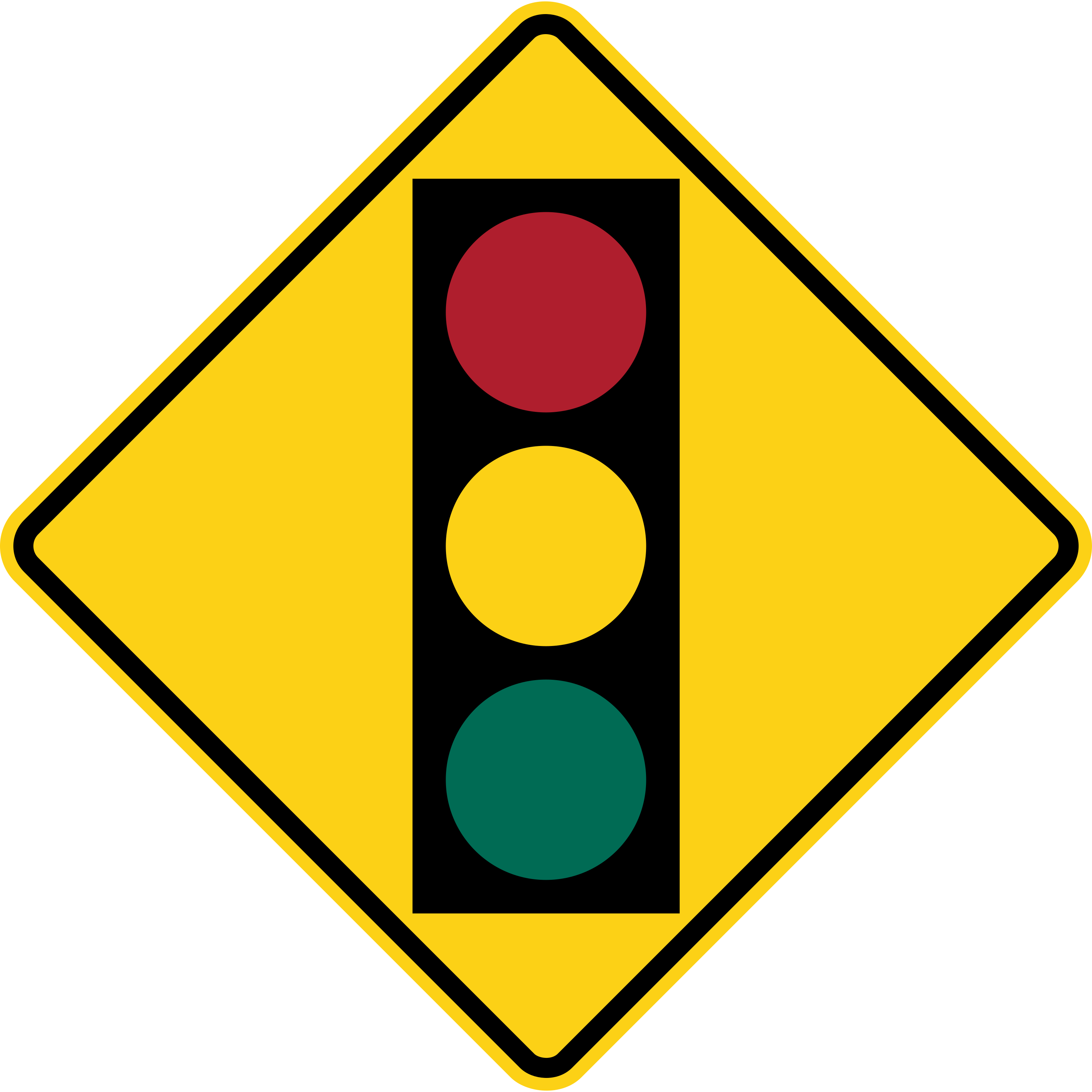
7. What does this warning sign tell a driver is ahead?
- A stop sign is ahead; prepare to come to a full stop before the sign.
- A traffic light is ahead; prepare to stop if the light is red or changes. (correct)
- A yield sign is ahead; prepare to slow and give way to cross traffic.
- A railroad crossing is ahead; prepare to stop for an approaching train.
Why: The Signal Ahead diamond warns that a traffic light is coming and calls for you to be ready to stop if the light is red or changes when you reach it. The trap is the answer that reads this as Stop Ahead. Stop Ahead is also a yellow diamond, but its interior symbol is a red octagon, not the signal head printed on the sign in front of you.
-
8. What is the safest response for a driver traveling in the right lane who sees this Right Lane Closed Ahead sign?
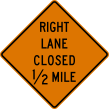
- Merge out of the right lane early rather than waiting for it to end (correct)
- Stay in the right lane until it physically ends, then merge left
- Come to a stop at the sign and wait for the lane to reopen
- Move all the way to the far left lane before reaching the work zone
Why: The sign is posted in advance of the closure so you have time to find a safe gap and merge out of the right lane before the lane runs out. Move over while traffic is still flowing at speed, not once you reach the taper. Drivers who read the advance warning as permission to ride the closing lane to the last inch, then force a merge where it ends, are the ones who miss this.
-
9. What should a driver do after seeing this Reduced Speed Limit Ahead sign near a work zone?
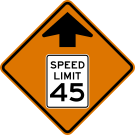
- Slow to the posted number before reaching the regulatory sign it announces (correct)
- Drop to the shown speed immediately as soon as this sign is visible
- Come to a complete stop before the marked work zone begins
- Keep the current speed until workers are visible in the zone
Why: An orange diamond warns of what is ahead, not what is required now. The number posted on this sign starts where the regulatory sign it announces is placed, so you slow through the gap and arrive at that regulatory sign already at the new limit. Drivers who read any sign carrying a speed number as the limit itself brake the moment they see this one, applying the reduction before the zone it belongs to.
-
10. A lane is marked on the pavement with a white arrow that points both left and right. What does this require of a driver in that lane?

- Turn left or turn right; going straight is not allowed. (correct)
- Turn left only, since the left arrow has priority.
- Continue straight or turn, based on traffic conditions.
- Yield to oncoming traffic before choosing a direction.
Why: A two-headed arrow marks a mandatory-turn lane: a driver in that lane must go left or right, and continuing straight is not permitted. The trap is the option that keeps straight on the table as a traffic-dependent choice, which is how a shared through-and-turn lane works. This marking is not shared. The lane is dedicated to turning, and the through movement has been ruled out before the stop bar.
Where to go next.
Ready for a longer go? Take the full Illinois practice test or jump into the topic study guide.
This diagnostic is one snapshot. The Illinois book unlocks a companion that turns it into a ranked study plan and re-ranks your weakest topics every time you practice, so the top of the list is always what to drill next.