South Carolina Driver's Permit Diagnostic Quiz
Find your weak spots before you book the test. 10 questions drawn from the topics the South Carolina driver manual spends the most time on. You'll see which topics need work the moment you finish; enter your email at the end and we'll send the full ranked plan with exact scores and the chapters to study next.
South Carolina Driver's Permit Diagnostic Quiz (10 questions). Correct answers and explanations follow each question.
-
1. What does this warning sign tell a driver is ahead?
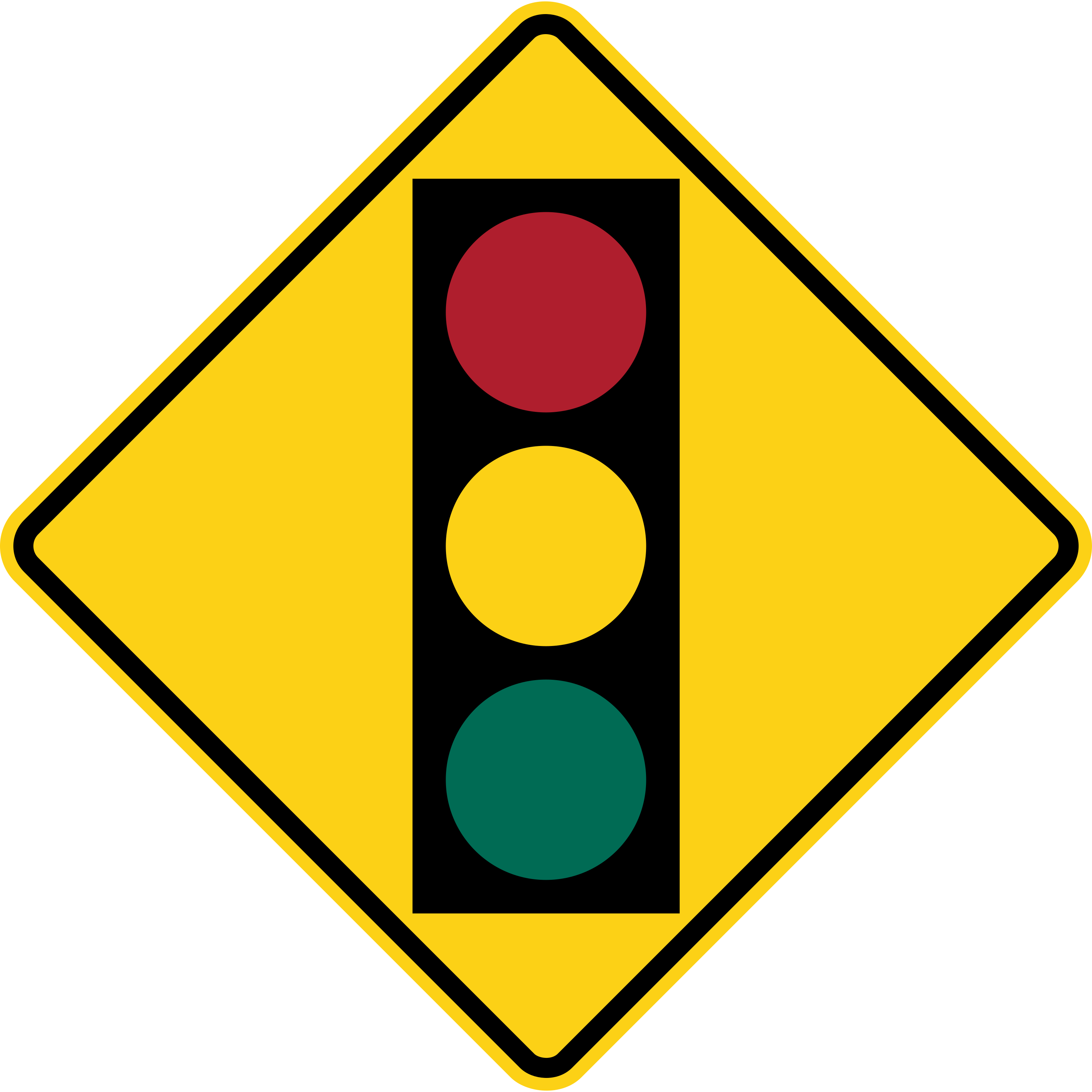
- A stop sign is ahead; prepare to come to a full stop before the sign.
- A traffic light is ahead; prepare to stop if the light is red or changes. (correct)
- A yield sign is ahead; prepare to slow and give way to cross traffic.
- A railroad crossing is ahead; prepare to stop for an approaching train.
Why: The Signal Ahead diamond warns that a traffic light is coming and calls for you to be ready to stop if the light is red or changes when you reach it. The trap is the answer that reads this as Stop Ahead. Stop Ahead is also a yellow diamond, but its interior symbol is a red octagon, not the signal head printed on the sign in front of you.
-
2. This orange diamond sign warns of a bump in a work zone. What should you do?
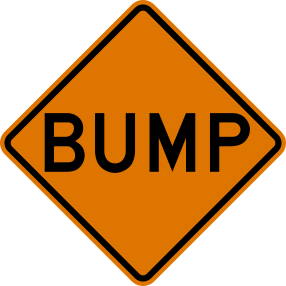
- Slow down before reaching the bump. (correct)
- Come to a complete stop before the patched pavement.
- Change lanes to avoid the raised pavement.
- Maintain speed to cross the bump smoothly.
Why: The sign warns that a short, abrupt rise lies ahead in the construction area, and the safest response is to slow down before you reach it so the vehicle stays stable and cargo, suspension, and following traffic aren't jolted. Drivers who trust the road habit that a bit of momentum floats a small bump, and so try to hold speed to cross it smoothly, are the ones who miss the sign's slow-down instruction.
-
3. What does this rest area sign require of a driver who wants to stop at the rest area?
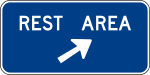
- Turn where the arrow points to enter the rest area. (correct)
- Continue straight; the entrance ramp is farther ahead.
- Take the next freeway exit to reach the rest area.
- Slow down for pedestrians walking across the roadway.
Why: The sign is posted at the turn-off itself, and the diagonal arrow shows the ramp or driveway that enters the rest area. The trap is the answer that treats it as an advance notice placed miles ahead of the exit; that job belongs to a different rest area guide sign posted well upstream, while this one appears right at the entrance and is the last chance to turn in.
-
4. A broken white line separates your lane from the lane to your left, both traveling in the same direction. What does this marking permit?

- Lane changes across the line when it is safe to do so. (correct)
- Passing by crossing into oncoming traffic.
- Crossing only in an emergency.
- Nothing; the line must not be crossed.
Why: A broken white line divides lanes moving the same way, and a driver may cross it to change lanes whenever the move is safe: signal, check mirrors and blind spots, then move over. The choice about passing into oncoming traffic reaches for the rule that governs broken yellow center lines on two-way roadways; broken white never sits between opposing lanes and has nothing to do with oncoming vehicles.
-
5. A solid white line runs along the right side of the roadway. What does it mark?

- The right edge of the travel lane and the boundary with the shoulder (correct)
- The centerline between traffic moving in opposite directions
- The boundary between two travel lanes going the same direction
- A zone where passing other vehicles is prohibited
Why: A solid white line on the right side of the road marks the right edge of the travel lane and separates the lane from the shoulder. The trap is the same-direction lane choice: white does divide lanes moving the same way, and a driver applying that broad rule can miss that this particular line hugs the shoulder rather than sitting between two travel lanes.
-
6. What should a driver do when approaching this Road Work Ahead sign?
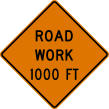
- Slow down and watch for workers, equipment, and changed lanes. (correct)
- Stop at the sign and wait for a flagger before proceeding.
- Merge left because the right lane closes at the sign.
- Take the marked detour beginning at the sign.
Why: This advance warning sign tells you there's road work ahead, so slow down and watch for workers, equipment, and changed lanes. The merge answer comes from treating this general work-zone warning as the arrowed lane-closure sign that follows it further along the approach only when a lane actually drops.
-
7. What does this Speed Limit 50 sign tell a driver about 50 mph on this roadway?
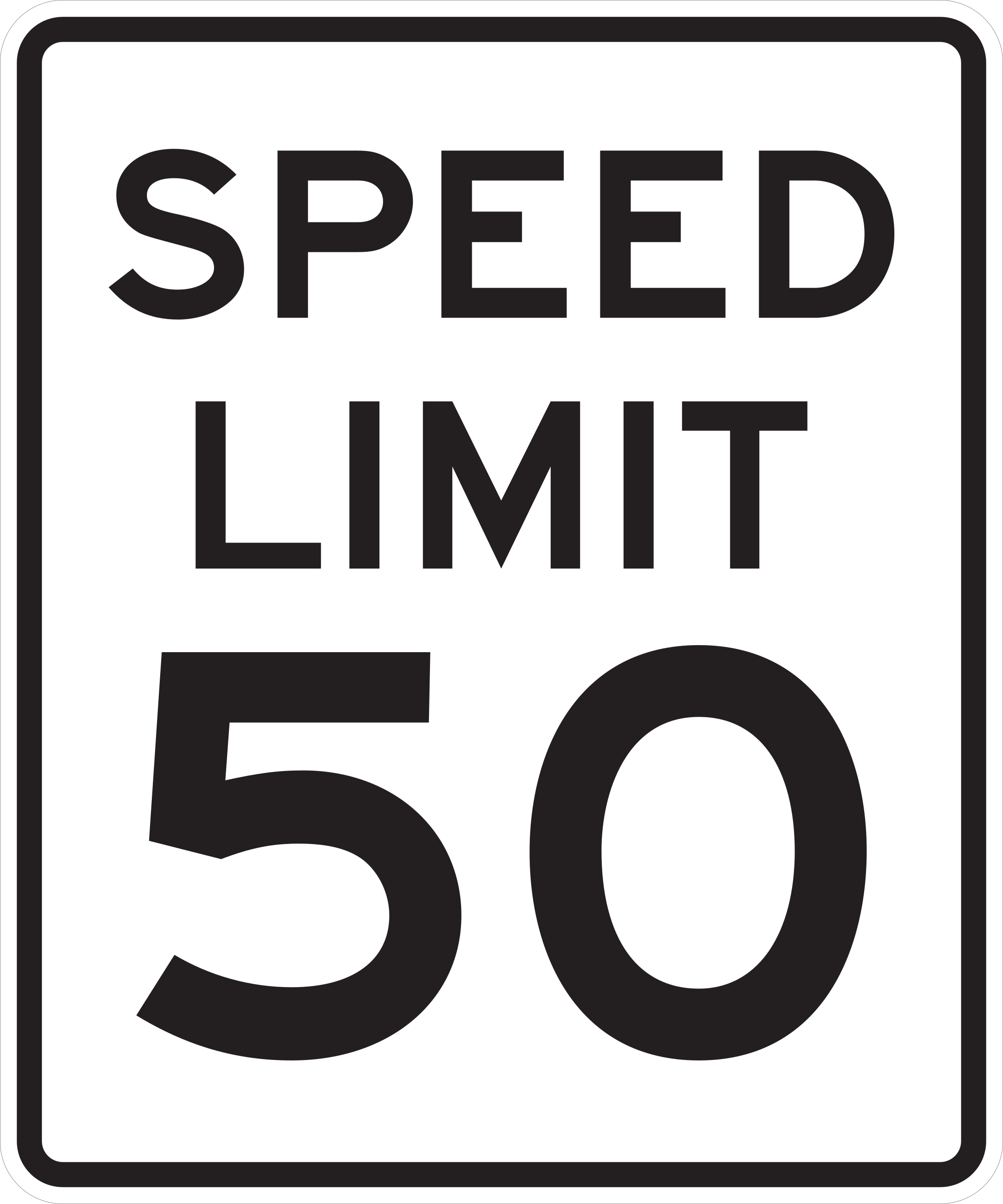
- 50 mph is the maximum legal speed on this roadway. (correct)
- 50 mph is the required minimum speed for through traffic here.
- 50 mph is an advisory speed for a curve or hazard ahead.
- Drivers should target 50 mph as the ideal cruising speed here.
Why: The sign posts the statutory maximum for the road ahead, so 50 mph is the ceiling, the highest speed a driver may legally travel until another speed limit sign changes it. Nothing on this sign requires driving 50 mph; it caps the speed rather than mandating it. Drivers who read the number as a required minimum are borrowing the look of a different white rectangle specifically labeled MINIMUM SPEED or MINIMUM SPEED LIMIT.
-
8. You are driving on a through street and approach an intersection with a green horizontal rectangle sign posted overhead. What does this D3-1 street name sign identify?

- The name of the cross street you are about to reach at the intersection. (correct)
- The name of the street you are currently traveling along right now.
- The remaining distance to the next town along your current route.
- The number of a numbered highway route you are approaching soon.
Why: A D3-1 street name sign is a guide sign posted at an intersection, and on a through street it names the cross street you are about to reach so you know which turn is coming up. The tempting wrong pick is the choice about the street you're currently on, which mirrors how a passenger reads a street sign on a residential block as confirmation of the road the car is already on; at a through-street intersection the D3-1 label goes to the crossing roadway instead.
-
9. What does this No Right Turn sign require of a driver in the lane where it is posted?
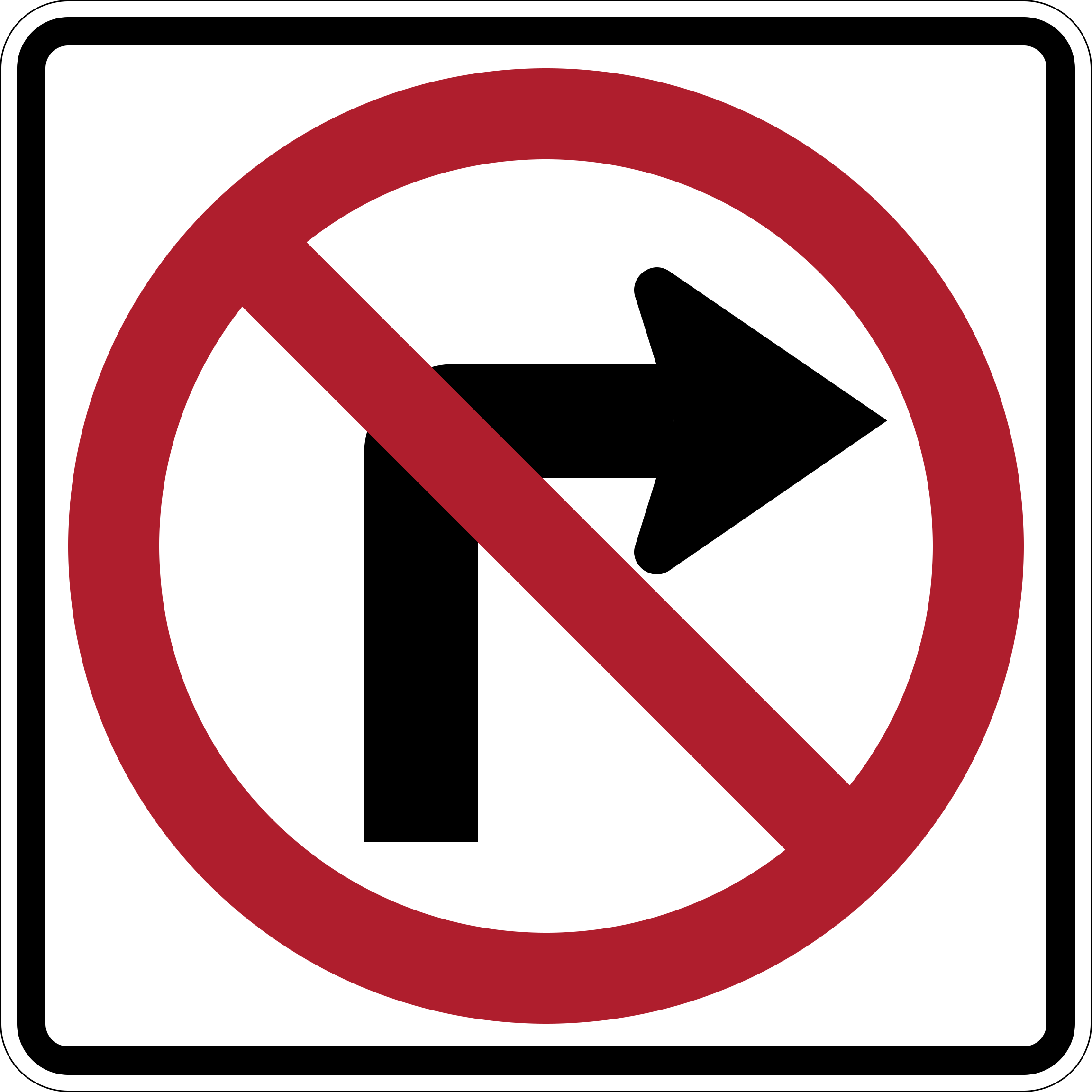
- Stop before turning right, then proceed when the way is clear.
- Continue straight or use another approved movement instead of turning right. (correct)
- Yield to any crossing traffic before completing a right turn.
- Turn right only when a green arrow signal is showing.
Why: The sign forbids a right turn at that intersection or driveway from the lane where it's posted, so a driver in that lane continues straight or uses another approved movement. The stop-then-turn answer pulls at drivers who carry a stop-sign habit into a white regulatory sign, treating a full stop as permission to complete the turn; the R3-1 is an outright prohibition, and no amount of stopping first satisfies it.
-
10. What does this Reduced Speed Limit Ahead sign require of a driver?
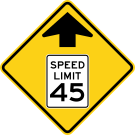
- Begin slowing so your speed is at or below the new limit by the regulatory sign that follows. (correct)
- Immediately drop to the value shown the moment you pass this sign.
- Slow only if current road conditions make the posted limit unsafe.
- Hold current speed until you reach the new regulatory speed-limit sign.
Why: This sign is advance notice. Begin slowing now so your speed is at or below the new limit by the time you reach the regulatory sign that actually posts it. The trap is the choice that says drop to the shown value the moment you pass the diamond. That reads the yellow warning as if it were the black-on-white regulatory posting, but a yellow diamond never sets the enforceable limit; the regulatory sign that follows does.
Where to go next.
Ready for a longer go? Take the full South Carolina practice test or jump into the topic study guide.
This diagnostic is one snapshot. The South Carolina book unlocks a companion that turns it into a ranked study plan and re-ranks your weakest topics every time you practice, so the top of the list is always what to drill next.